20 Common Things That Are 30 Inches Long (Everyday Examples)
Thirty inches is exactly 2.5 feet, 76.2 centimeters, or 2 feet 6 inches. Common things that are 30 inches long or wide include certain kitchen ranges, bathroom vanities, bathtubs, interior doors, youth baseball bats, skateboards, and dog crates. These familiar objects make it easier to picture the measurement without reaching for a tape measure.
Some items are manufactured to an exact 30-inch specification, while others are only approximately that size. Knowing the difference is helpful when buying furniture, checking appliance dimensions, or estimating space around your home. For more everyday measurement comparisons, visit Snap Planets.
Key Takeaways
- 30 inches equals exactly 2.5 feet, 76.2 centimeters, 762 millimeters, or 0.762 meters.
- Many residential kitchen ranges are sold in a nominal 30-inch width, making them useful visual references.
- A 30-inch bathroom vanity, interior door, or youth baseball bat provides another practical size comparison.
- Five U.S. dollar bills placed lengthwise measure approximately 30.7 inches, slightly longer than 30 inches.
- For accurate furniture, appliance, or construction measurements, verify actual product dimensions rather than relying on standard size labels.
How Long Is 30 Inches? Exact Measurements and Visual Comparisons
Thirty inches is the same as two full feet plus another six inches. To picture that distance, imagine a 24-inch section of a measuring tape with an additional half-foot added to the end.
In everyday terms, 30 inches is a little over three-quarters of a meter. It is long enough to span a substantial part of a bathroom doorway, match the width of many household appliances, or cover the length of a small sports bat.
30 Inches Conversion Chart
| Unit | Equivalent to 30 Inches |
|---|---|
| Feet | 2.5 feet |
| Feet and inches | 2 feet 6 inches |
| Centimeters | 76.2 cm |
| Millimeters | 762 mm |
| Meters | 0.762 m |
| Yards | 0.8333… yards |
These conversions follow the international definition of one inch as exactly 2.54 centimeters and one foot as 12 inches.
What Does 30 Inches Look Like in Real Life?
A useful mental picture is a typical 30-inch kitchen range measured from its left side to its right side. Another is a youth baseball bat labeled 30 inches, measured from the end of the knob to the tip of the barrel.
However, length is not the only way an object can measure 30 inches. A bathroom vanity may be 30 inches wide, a bar stool may have a 30-inch seat height, and a pet crate may be 30 inches from front to back.
When comparing objects, pay attention to which dimension is being measured. Height, width, depth, and overall length describe different directions even when the numerical measurement is identical.
Everyday Objects That Measure 24 Inches Long
20 Common Things That Are 30 Inches Long, Wide, or Tall
The following examples cover household fixtures, sports equipment, furniture, travel accessories, and measuring tools. Items with a specific 30-inch size designation make the strongest references, while objects that vary by model are best used for rough comparisons.
1. A 30-Inch Kitchen Range
One of the easiest ways to visualize 30 inches is to look at a residential kitchen range. Many freestanding, slide-in, gas, and electric ranges are marketed in a nominal 30-inch width.
This appliance category is common in American kitchens because it fits widely used cabinet layouts. Some models have actual exterior widths slightly under 30 inches to allow installation clearance.
The important dimension is the side-to-side width, not the appliance’s height or front-to-back depth. For a quick visual estimate, a typical 30-inch range is one of the most recognizable household references.
2. A 30-Inch Bathroom Vanity
Bathroom vanities are available in numerous widths, including 24, 30, 36, and 48 inches. A 30-inch model is a familiar single-sink option for bathrooms where floor space is limited.
Imagine the distance between the left and right edges of a 30-inch vanity cabinet. That horizontal span represents 2.5 feet.
When shopping, remember that a vanity countertop can extend beyond the cabinet. A product labeled 30 inches may therefore have a slightly different overall countertop width.
3. The Width of a Standard-Size Alcove Bathtub
A common bathtub configuration measures approximately 60 inches long and 30 inches wide. The 30-inch measurement runs across the tub from one side to the other, not from the head end to the foot end.
Some alcove bathtubs are 32 inches wide or have other dimensions, so the measurement is not universal.
A nominal 60-by-30-inch bathtub is a useful reference because its width is exactly half of its nominal length. This proportion makes it easy to picture the smaller dimension.
4. A 30-Inch Interior Door
Many American homes have interior doors sold in widths such as 24, 28, 30, 32, and 36 inches. A 30-inch door is one common option for bedrooms and other interior spaces.
Stand facing a door of this size and imagine the width of the door slab from one vertical edge to the other. That distance represents approximately 30 inches.
Do not confuse the door slab width with the overall frame or rough opening. Accessibility and local construction requirements may also call for wider doors in certain locations.
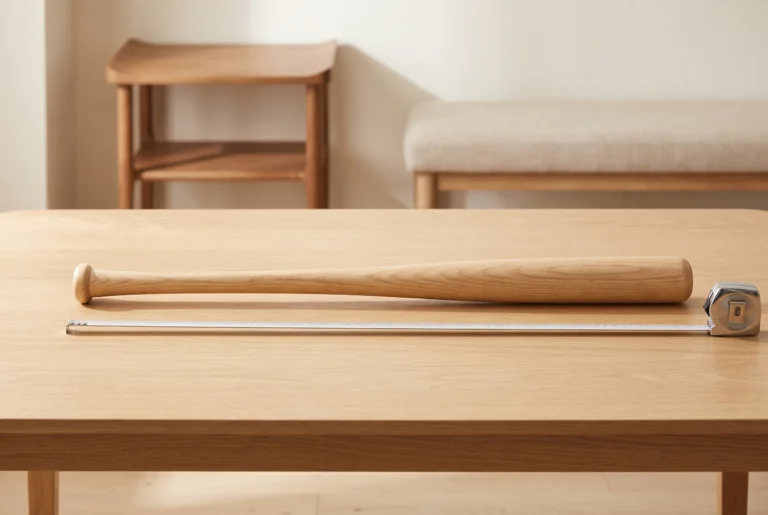
5. A 30-Inch Youth Baseball Bat
Baseball bats are sold with specific length markings, which makes them especially convenient measurement references. A bat labeled 30 inches measures that distance from the bottom of the knob to the end of the barrel.
This size is found among youth baseball bats, although the right length depends on a player’s height, strength, and league requirements rather than age alone.
Unlike an irregular household object, the bat provides a defined end-to-end measurement. If you already own one, check its length marking before using it as a reference.
6. A 30-Inch Skateboard Deck
Skateboard decks come in a wide range of lengths. Some shorter street and youth-oriented decks are approximately 30 inches long.
The length is measured from the nose to the tail. A skateboard’s width is much smaller, so the long dimension is the one to use for comparison.
For a household with a skateboard, this is a practical reference. Check the manufacturer’s specifications because many full-size skateboard decks extend beyond 30 inches.
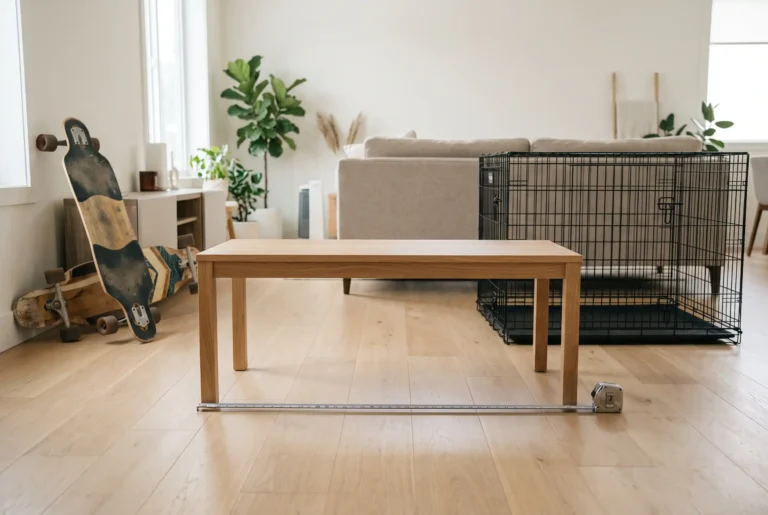
7. A 30-Inch Dog Crate
Wire dog crates are commonly sold in labeled lengths such as 24, 30, 36, 42, and 48 inches. A 30-inch crate provides a clear front-to-back reference for this measurement.
Its actual exterior dimensions may differ slightly from the nominal size, and interior space will generally be smaller.
Crate sizing should also account for the individual dog. The animal should have enough room to stand comfortably, turn around, and lie down in a natural position. Breed labels alone are not a reliable way to choose the correct crate.
8. A 30-Inch Spirit Level
Spirit levels are straight tools used to check horizontal and vertical alignment. Models measuring 30 inches long are available for woodworking, installation, and other tasks.
A level marked 30 inches provides a particularly straightforward reference because its length is a manufactured specification.
If you are installing shelving or arranging furniture, this tool can help you visualize a 30-inch span while also checking whether a surface is level.
9. A Bar Stool With a 30-Inch Seat Height
Bar-height stools commonly have seats around 28 to 30 inches above the floor. A stool with a 30-inch seat height provides a vertical example of the measurement.
These stools are generally intended for taller counters or bar tops, often around 40 to 42 inches high.
Measure from the floor to the sitting surface rather than the backrest. A bar stool with a back can have a much greater overall height than its seat-height specification.
10. A 30-Inch Nightstand
Nightstands vary considerably in height, but some taller models stand approximately 30 inches from the floor to the top surface.
These can work well beside higher beds, particularly when a thick mattress and foundation raise the sleeping surface.
For comparison purposes, picture the nightstand standing upright. Its top surface would be 2.5 feet above the floor, although the exact model should be measured before purchase.
11. A 30-Inch Kitchen Wall Cabinet
Kitchen wall cabinets are manufactured in numerous heights, and 30 inches is a common nominal cabinet height.
This measurement runs vertically from the cabinet’s bottom edge to its top edge. It does not necessarily describe the cabinet’s width or depth.
Cabinets are a useful reference when planning storage because their dimensions are often listed clearly in inches. A 30-inch-high wall cabinet makes the length easy to picture vertically.
12. A 30-Inch Round Dining Table
Small dining and café-style tables are available with tabletops measuring 30 inches in diameter.
The diameter is the straight-line distance across the center of a circular surface. On a 30-inch round table, that distance is 2.5 feet.
This is a useful comparison when evaluating compact dining spaces, breakfast nooks, or apartment furniture. Keep in mind that chair clearance requires additional room beyond the tabletop diameter.
13. A 30-Inch-Wide Desk
Compact desks are sometimes made with a 30-inch-wide work surface. This dimension can suit a small laptop station, writing area, or narrow room.
The measurement runs horizontally across the front of the desktop. A desk this width offers considerably less surface area than larger office desks, especially when a monitor and keyboard are placed together.
As a visual reference, a compact 30-inch desk is particularly helpful when planning furniture arrangements in restricted spaces.
14. A Large Suitcase Measuring Around 30 Inches Tall
Some large checked-luggage suitcases are approximately 30 inches tall, depending on whether the listed measurement includes wheels and handles.
Stand one upright and measure from the floor to the highest fixed point. This gives a convenient vertical example of 2.5 feet.
Luggage sizes differ widely, and airline checked-baggage limits often consider the combined exterior length, width, and height. A 30-inch height alone does not establish whether a suitcase meets a particular airline’s allowance.
15. A 30-Inch Floating Shelf
Floating wall shelves are sold in various lengths, including 30-inch versions. Their straight edges offer another useful reference.
A shelf labeled 30 inches long extends 2.5 feet horizontally along the wall. Its depth and thickness are separate measurements.
This example is especially practical when planning display shelves, measuring available wall space, or checking whether decorative objects will fit comfortably.
16. A 30-Inch Rolling Pin
Extra-long rolling pins, including some French-style models used for large sheets of dough, are available in lengths around 30 inches.
These are substantially longer than many standard household rolling pins and can be useful for handling wider pastry sheets.
A long rolling pin offers a simple straight-line comparison. However, rolling pins come in many lengths, so only use one as an exact reference if its dimensions are known.
17. A 30-Inch Yoga or Foam Exercise Roller
Foam rollers used for exercise and muscle self-massage are manufactured in several lengths, including models measuring 30 inches.
A long cylindrical roller makes 30 inches easy to visualize when laid horizontally on the floor.
Shorter rollers are also common. The stated 30-inch dimension describes the length of the cylinder, not its diameter.
18. A 30-Inch Plant Stand
Indoor plant stands and pedestal stands are available with heights close to 30 inches. A stand of this size raises a potted plant approximately 2.5 feet above the floor at its supporting surface.
It provides a useful vertical reference, particularly near windows or living-room furniture.
Remember that the plant and its pot add height. A stand advertised as 30 inches tall does not mean the complete plant arrangement will be 30 inches high.
19. Two and a Half 12-Inch Rulers
A standard ruler is 12 inches long. Placing two rulers end-to-end creates a 24-inch length, and adding another six inches produces exactly 30 inches.
The arithmetic is simple:
12 inches + 12 inches + 6 inches = 30 inches.
This is one of the most dependable methods because you are combining actual marked measurements rather than estimating from an object that may vary in size.
To minimize errors, align the measurement marks carefully without leaving gaps or overlapping the rulers.
20. Five U.S. Dollar Bills Laid End-to-End
Modern U.S. paper currency measures approximately 6.14 inches along its longer edge. Five bills aligned lengthwise give a combined distance of approximately 30.7 inches.
That is 0.7 inch longer than the target, so the method works best for a rough estimate rather than exact measuring.
If you have five bills available, line them up with their short edges touching. The resulting length is slightly more than 2.5 feet, making it a convenient portable comparison.
Quick Comparison of Everyday 30-Inch Objects
Not every example offers the same level of accuracy. A product specifically labeled 30 inches can be useful for measurement, while a general furniture category is better suited to visual estimation.
| Everyday Object | Dimension | How Closely It Matches 30 Inches |
|---|---|---|
| 30-inch kitchen range | Width | Nominally 30 inches; actual width may vary |
| 30-inch bathroom vanity | Width | Nominal size; countertop may differ |
| 60-by-30-inch bathtub | Width | Nominally 30 inches |
| 30-inch door slab | Width | Specified door size |
| 30-inch baseball bat | Length | Marked equipment length |
| 30-inch dog crate | Length | Nominal size; actual dimensions vary |
| 30-inch spirit level | Length | Specified tool length |
| Bar-height stool | Seat height | Some models measure 30 inches |
| Large checked suitcase | Height | Some models measure around 30 inches |
| Five U.S. dollar bills | Combined length | Approximately 30.7 inches |
For accurate results, a ruler, measuring tape, or other calibrated measuring instrument is preferable to a nominal product dimension. The table is most useful for developing a sense of scale.
How to Measure 30 Inches Without a Tape Measure
If you do not have a measuring tape nearby, several ordinary objects can help you estimate or construct a 30-inch length.
Method 1: Combine a 24-Inch Measurement With 6 Inches
This is a straightforward approach when you have a two-foot ruler, marked straightedge, or known 24-inch reference.
- Identify a straight 24-inch distance.
- Mark the beginning and end of that distance.
- Add six inches beyond the end mark using a standard ruler.
- The complete span now measures 30 inches.
This method gives an exact result when the measuring tools and alignment are accurate.
Method 2: Use Three Standard Rulers
Lay two 12-inch rulers end-to-end, then use the first six inches of a third ruler.
For best results, use the numbered measurement marks rather than assuming the physical ends of every ruler coincide perfectly with zero.
This approach is suitable for school projects, craft measurements, and basic household layouts.
Method 3: Use Five Dollar Bills for an Approximation
Lay five U.S. dollar bills end-to-end along their longer edges. Together, they measure approximately 30.7 inches.
Because the result exceeds 30 inches, subtract about 0.7 inch if you need a closer estimate.
This technique is useful for understanding size but is not accurate enough for tasks requiring tight tolerances.
Method 4: Check a Known Household Fixture
If your kitchen range, bathroom vanity, or interior door is a confirmed 30-inch model, it can serve as a convenient reference.
Product manuals, labels, or original specifications may identify the relevant dimension. Remember that a nominal 30-inch appliance may actually be fractionally narrower.
Method 5: Use a Printed Measuring Guide
A properly scaled printable ruler can help when conventional measuring tools are unavailable.
Print at 100% or actual size, without using fit-to-page scaling. Verify the calibration against a known reference before trusting the measurement.
Paper stretching, print settings, and imperfect alignment can introduce errors, so printed guides are more suitable for everyday estimates than precision work.
Familiar Everyday Items That Are 13 Inches Long
How Does 30 Inches Compare With Other Common Measurements?
A measurement often makes more sense when compared with shorter and longer distances. Thirty inches falls between two feet and three feet, exactly halfway between them.
| Measurement | Feet | Centimeters | Difference From 30 Inches |
|---|---|---|---|
| 6 inches | 0.5 foot | 15.24 cm | 24 inches shorter |
| 12 inches | 1 foot | 30.48 cm | 18 inches shorter |
| 18 inches | 1.5 feet | 45.72 cm | 12 inches shorter |
| 24 inches | 2 feet | 60.96 cm | 6 inches shorter |
| 30 inches | 2.5 feet | 76.2 cm | Exact reference |
| 36 inches | 3 feet | 91.44 cm | 6 inches longer |
| 48 inches | 4 feet | 121.92 cm | 18 inches longer |
These relationships are helpful when interpreting online product listings. For example, a 30-inch tabletop is six inches wider than a 24-inch tabletop but six inches narrower than a 36-inch one.
That difference may sound small, but it can influence whether furniture fits comfortably in a narrow space.
Is 30 Inches Considered Long, Wide, or Tall?
Thirty inches is a medium-sized measurement for many household objects, but its significance depends entirely on what is being measured.
- For a doorway: 30 inches is one of several common interior door widths, but it may not provide enough clear opening for certain accessibility needs.
- For a tabletop: 30 inches can be a suitable width or diameter for a compact desk or small table.
- For a baseball bat: 30 inches falls within the range of lengths offered for younger players.
- For a bed: 30 inches is much narrower than the 38-inch nominal width of a standard U.S. twin mattress.
- For a storage shelf: 30 inches offers a useful horizontal span for books, small containers, or decorative objects.
These comparisons show why it is better to connect a measurement with its intended use instead of simply deciding whether it is large or small.
Where Does a 30-Inch Measurement Matter Most?
Knowing what 30 inches looks like is helpful for casual estimates. However, it becomes more important when a product must fit within a fixed space or match other equipment.
Kitchen Appliance Installation
A 30-inch range is designed for a particular kitchen layout, but the manufacturer’s installation instructions determine the actual clearance requirements.
Measure the cabinet opening and check the appliance’s precise width, depth, height, electrical requirements, and any relevant installation clearances.
Do not assume that every product described as 30 inches wide has an exterior width of exactly 30.000 inches.
Bathroom Renovations
A 30-inch vanity can fit in a relatively compact bathroom, but the cabinet width is only part of the planning process.
Consider the countertop overhang, door and drawer swing, plumbing connections, and space needed to move around comfortably.
Likewise, a 30-inch-wide bathtub must fit the actual alcove and meet the selected product’s installation specifications.
Furniture Shopping
Online furniture listings may provide measurements for the overall product as well as individual components.
For a nightstand, confirm height, width, and depth separately. For a desk, check whether the advertised 30 inches describes the desktop width or another dimension.
Using masking tape to outline the product footprint on the floor can make the size easier to understand before buying.
Sports Equipment Selection
A 30-inch baseball bat has a clearly defined length, but length alone does not determine whether it is suitable.
Weight, swing feel, player height, strength, and league equipment rules all matter. A bat that is the correct length can still be too heavy for comfortable control.
For skateboards, deck width, wheelbase, overall length, and riding style also influence the choice.
Common Mistakes When Estimating 30 Inches
Small measurement errors can lead to unexpected problems, especially when ordering furniture or installing appliances.
- Confusing nominal and actual dimensions: A product advertised as 30 inches may have an actual exterior measurement slightly above or below that number.
- Measuring the wrong direction: A 30-inch-high item is not necessarily 30 inches wide or deep.
- Ignoring handles and projections: Wheels, knobs, handles, and countertops may extend beyond the main body of a product.
- Assuming all similar products are identical: Bathtubs, doors, desks, and suitcases are available in multiple sizes.
- Using body proportions as exact references: Arm, leg, hip, and stride measurements vary widely between individuals.
- Forgetting installation clearance: An object measuring 30 inches may need additional space to operate, open, or be installed correctly.
The simplest solution is to treat everyday objects as visual guides and use an appropriate measuring instrument for decisions where accuracy matters.
Practical Tips for Remembering a 30-Inch Length
You do not need to memorize every conversion to develop a reliable sense of scale. Three simple relationships cover most everyday situations.
- Remember 2.5 feet: Thirty inches means two feet plus half of another foot.
- Picture a kitchen range: A nominal 30-inch residential range provides an easy horizontal reference.
- Think 76.2 centimeters: This exact conversion is useful when comparing U.S. and metric product dimensions.
For a quick estimate, identify a familiar object whose dimensions you have already confirmed. Reusing the same reference regularly makes the measurement easier to visualize.
For more demanding tasks, such as installing built-in cabinetry or selecting replacement fixtures, measure the available space directly rather than relying on memory.
Making Sense of 30 Inches in Everyday Life
Thirty inches is exactly 2.5 feet or 76.2 centimeters. From kitchen ranges and bathroom vanities to youth baseball bats, shelves, and skateboards, many familiar objects can help you picture this distance.
The most useful comparisons are objects with confirmed 30-inch dimensions, such as a marked baseball bat, a manufactured 30-inch level, or a properly measured piece of furniture. Items that are only approximately this size still provide helpful visual references, but their dimensions should not be assumed to be exact.
When precision matters, verify the object’s actual dimensions and measure the available space. For everyday size comparisons, remembering a 30-inch range or two and a half feet is usually enough to make the measurement easy to understand.
Frequently Asked Questions
What is 30 inches in feet and inches?
Thirty inches equals 2 feet 6 inches, or 2.5 feet. Since one foot contains 12 inches, 24 inches makes two feet and the remaining six inches adds another half-foot.
How many centimeters are in 30 inches?
Thirty inches is exactly 76.2 centimeters. It also equals 762 millimeters or 0.762 meters because one international inch is defined as exactly 2.54 centimeters.
What everyday item is exactly 30 inches long?
A baseball bat specifically labeled 30 inches or a 30-inch spirit level is a useful example. You can also construct a 30-inch measurement using two 12-inch rulers and another six inches from a third ruler.
Are all standard kitchen ovens 30 inches wide?
No, kitchen ranges are available in several widths, including 20, 24, 30, and 36 inches. Even a range advertised as 30 inches may have an actual exterior width slightly below its nominal size.
How can I measure 30 inches without a measuring tape?
Use two standard 12-inch rulers and add another six inches, keeping the measurement marks accurately aligned. For a rough estimate, five U.S. dollar bills placed lengthwise span approximately 30.7 inches.
Is 30 inches the same as one yard?
No, one yard contains 36 inches, so 30 inches is six inches shorter than a yard. Thirty inches equals five-sixths of a yard, or approximately 0.8333 yard.
Is a 30-inch door wide enough for wheelchair access?
A 30-inch door slab does not necessarily provide adequate clear opening width for wheelchair access. Accessibility requirements depend on the applicable standards and actual unobstructed opening, so check those requirements before selecting a door.
How does 30 inches compare with three feet?
Three feet equals 36 inches, which is six inches longer than 30 inches. Therefore, a 30-inch object measures five-sixths of the length of a three-foot object.