18 Common Things That Are 12 Inches Long (Everyday Examples)
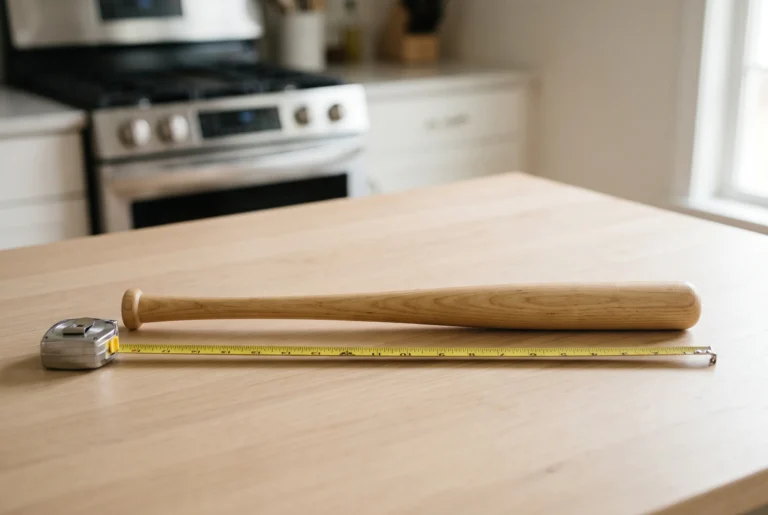
12 inches is exactly 1 foot, or 30.48 centimeters. Common things that are 12 inches long include a standard ruler, a 12-inch vinyl record, a footlong sandwich, a square scrapbook paper sheet, and the diameter of a 12-inch pizza pan. You can also estimate one foot using two U.S. dollar bills placed end to end or the long edge of an A4 sheet of paper.
Some objects measure exactly 12 inches by design, while others provide a close approximation. Knowing the difference helps when estimating furniture dimensions, checking package sizes, measuring household items, or planning small DIY projects. For more practical measurement guides and everyday size comparisons, visit Snap Planets.
Key Takeaways
- 12 inches equals exactly 1 foot, 30.48 centimeters, or 304.8 millimeters.
- A 12-inch ruler, a standard LP record, and a correctly sized 12-inch square craft sheet provide reliable one-foot references.
- Two modern U.S. dollar bills placed end to end measure approximately 12.28 inches, just over one-quarter inch longer than a foot.
- A4 paper measures approximately 11.69 inches along its longer side, making it a useful visual comparison.
- For accurate measurements, use a ruler or tape measure instead of relying on products whose actual dimensions may vary.
18 Everyday Things That Are 12 Inches Long or Close to It
One foot is a familiar measurement, but picturing its actual length without a measuring tool can be difficult. The following examples cover school supplies, kitchen equipment, entertainment items, building materials, and ordinary household objects.
For clarity, each example indicates whether its measurement is exact by specification, based on a labeled size, or only an approximation. A product described as 12 inches is not necessarily 12 inches across every part of its physical construction.
1. Standard 12-Inch Ruler
A standard 12-inch ruler is the most straightforward example of something one foot long. Its measurement scale runs from zero to 12 inches, giving you a direct reference for the distance.
Most school and office rulers also include centimeter markings, allowing you to compare 12 inches with 30.48 centimeters. Plastic, wooden, and metal rulers all serve the same basic purpose.
One detail matters: the ruler’s physical end may extend slightly beyond the zero mark. For accurate measurements, follow the printed scale rather than assuming the outer edges are exactly one foot apart.
2. Two 6-Inch Rulers Placed End to End
Two 6-inch rulers arranged in a straight line create a combined measurement of exactly 12 inches when their measuring scales are aligned without a gap or overlap.
These shorter rulers are commonly used in pencil cases, craft kits, and compact workspaces. They are convenient when a full-size ruler is unavailable.
Align the measured six-inch lengths carefully. Extra material beyond the printed scales can make the physical arrangement longer than 12 inches.
3. Standard 12-Inch Vinyl Record
A traditional full-size LP record has a nominal diameter of 12 inches. That means the distance across the center of the circular disc is approximately one foot.
Vinyl records provide a useful visual example because their round shape makes a 12-inch diameter easy to recognize. The measurement runs straight across the center, not around the curved outer edge.
Smaller records also exist, including 7-inch and 10-inch formats, so not every vinyl record measures a foot across.
4. A 12-Inch Pizza Pan
A pizza pan sold with a 12-inch diameter provides a familiar kitchen reference for one foot. Measuring straight across its center gives the specified diameter.
However, manufacturers may measure different features, such as the cooking surface or the outer rim. Consequently, two pans advertised as 12 inches may have slightly different exterior dimensions.
If you need to determine whether the pan fits inside an oven, drawer, or cabinet, measure its widest outside edges rather than relying solely on the advertised size.
5. A Footlong Sub Sandwich
A footlong sandwich is named for a length of 12 inches. This makes it one of the easiest food-related examples for visualizing a foot.
The word footlong describes the intended size, but an actual sandwich can differ slightly because of dough preparation, baking, and cutting. It should therefore be treated as an approximate reference rather than a precision measuring instrument.
For an informal comparison, imagine a full-size sub sandwich lying across a table. That length is roughly the same distance as a standard ruler’s measuring scale.
6. A 12-Inch Cake Board
Round cake boards are available in 12-inch diameters, while square cake boards can have 12-inch sides. Both offer an easy way to visualize one foot in a kitchen or bakery.
A round board measures 12 inches across its center. A square board measures 12 inches along each edge, provided its stated dimensions describe the finished board.
These boards are especially useful for understanding the space needed to transport or display a decorated cake. Remember that a cake’s decorations may extend beyond its supporting board.
7. A 12-Inch Square Scrapbook Paper Sheet
Scrapbook paper is commonly sold in 12-by-12-inch sheets. Each side is one foot long, making the sheet a practical reference for both length and area.
Because it is square, you can use any of its four edges to visualize 12 inches. Its total area is 144 square inches, equivalent to one square foot.
This example is particularly helpful for planning craft layouts, paper projects, decorative arrangements, or small artwork.
8. A 12-Inch Craft Cutting Mat
Craft cutting mats come in several sizes, including models with a 12-inch measurement along one side. A mat labeled 12 by 12 inches offers a convenient one-foot reference in both directions.
Some mats include a printed measurement grid. Others have grid markings that stop before the outer edge, so the useful measuring area and overall mat dimensions may differ.
Check whether the stated size refers to the mat itself or the printed working surface before using it for precise cutting.
9. A 12-Inch Floor Tile
Square floor tiles are available in a nominal 12-by-12-inch format. These are convenient references when estimating distances in kitchens, bathrooms, or other tiled rooms.
The distinction between nominal and actual size is important. Some tiles are slightly smaller than their advertised dimensions to accommodate grout joints and installation requirements.
A tiled floor can help you approximate a distance quickly, but measuring an actual tile and its grout spacing is more reliable when planning furniture or renovations.
10. A 12-Inch Frying Pan
Large frying pans and skillets are frequently offered in a 12-inch size. This measurement usually refers to the approximate diameter across the pan’s upper opening.
The flat cooking surface is generally smaller than the opening because the sides curve or slope upward. Handles also extend beyond the stated pan diameter.
A 12-inch skillet is useful for understanding how wide one foot looks, but it should not be used to estimate the full storage space required for cookware.
11. A 12-Inch Picture Frame
A picture frame designed for a 12-by-12-inch photograph or artwork provides another familiar one-foot reference. The nominal image opening or picture size is 12 inches along each side.
The complete frame is usually wider because of the surrounding border. For example, a frame holding 12-inch artwork may require more than 12 inches of wall space.
Use the advertised picture size to visualize a foot, and measure the complete frame when planning its placement.
12. A 12-Inch Shelf Bracket
Shelf brackets are sold in different support lengths, including 12-inch versions. A bracket with a specified 12-inch horizontal arm can demonstrate the depth of one foot.
This reference is particularly useful when considering wall shelves, utility storage, or workshop organization.
Bracket dimensions vary by design, and the labeled size may describe the support arm rather than the entire exterior shape. Review the actual dimensions before choosing mounting hardware.
13. An A4 Sheet of Paper
The longer side of A4 paper measures exactly 297 millimeters, or approximately 11.69 inches. That is only about 0.31 inches shorter than 12 inches.
A4 paper is widely used internationally and is occasionally found in American offices, schools, and homes. It offers a close visual estimate of one foot without requiring specialized equipment.
For comparison, standard U.S. Letter paper measures 8.5 by 11 inches, so its longer side is a full inch shorter than a foot.
14. Two U.S. Dollar Bills End to End
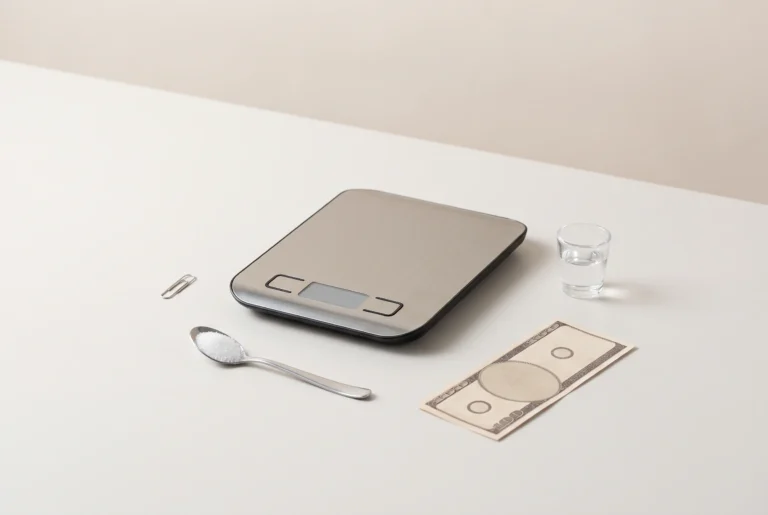
A modern U.S. dollar bill is approximately 6.14 inches long, according to the standard dimensions published by the U.S. Currency Education Program.
Placing two bills end to end produces a combined length of about 12.28 inches. That exceeds one foot by 0.28 inches, or a little more than one-quarter inch.
This makes currency a convenient emergency measuring reference, especially when you have no ruler nearby. It is reasonably close for rough estimates but not suitable for jobs requiring tight tolerances.
15. Three 4-Inch Index Card Edges
A standard 4-by-6-inch index card has one side that measures four inches. Place three cards in a straight line using their four-inch edges, and the total measured length is 12 inches.
This arrangement works well for school projects, desk organization, or estimating the length of a small object.
Make sure you are joining the four-inch dimensions rather than the six-inch sides. Three six-inch lengths would measure 18 inches, not 12.
16. Four 3-Inch Sticky Note Edges
Square sticky notes are commonly available in a 3-by-3-inch size. Four of these notes placed side by side, with no gaps or overlaps, create a row measuring 12 inches.
This is a particularly practical way to estimate a foot while sitting at a desk. You can arrange the notes along the edge of a folder, small box, or other flat object.
Sticky notes are made from paper, so their dimensions may vary slightly because of cutting tolerances or damage along their edges.
17. Four Regulation Hockey Pucks in a Row
A regulation NHL hockey puck is specified as three inches in diameter and one inch thick. Therefore, four pucks placed edge to edge in a straight row span 12 inches across their diameters.
This arrangement provides a useful horizontal example of one foot. Unlike irregularly shaped household items, the puck’s circular dimensions are standardized for regulated play.
The pucks need to remain in contact and properly aligned for their total span to represent 12 inches.
18. Twelve Regulation Hockey Pucks Stacked
The thickness of a regulation NHL hockey puck is one inch. Stacking 12 pucks flat on top of each other produces a nominal height of 12 inches.
This illustrates the same measurement vertically rather than horizontally. It is also a simple demonstration of how repeated one-inch units create a foot.
Any practical stack should remain stable and level. The example is intended to explain dimensions rather than recommend building a tall, unsecured stack.
Quick Comparison of Common 12-Inch Objects
The examples above vary in precision. Some have standardized dimensions, some are sold by nominal size, and others are simply close enough to provide a useful estimate.
This table summarizes the most convenient choices and how accurately they represent one foot.
| Everyday Object | Length or Diameter | Accuracy as a 12-Inch Reference |
|---|---|---|
| 12-inch ruler scale | 12 inches | Exact intended measuring distance |
| Two 6-inch ruler scales | 12 inches combined | Exact when properly aligned |
| Full-size LP record | 12-inch nominal diameter | Standardized nominal size |
| 12-by-12-inch scrapbook paper | 12 inches per side | Specified sheet size |
| A4 paper, long edge | 11.69 inches approximately | 0.31 inches short |
| Two U.S. dollar bills | 12.28 inches approximately | 0.28 inches over |
| Three 4-inch index card edges | 12 inches combined | Exact by nominal dimensions |
| Four 3-inch sticky note edges | 12 inches combined | Exact by nominal dimensions |
| Four regulation hockey puck diameters | 12 inches combined | Specified regulation dimensions |
| Twelve regulation hockey puck thicknesses | 12 inches combined | Specified regulation dimensions |
Most reliable choice: Use a ruler or measuring tape for accuracy. For visual estimates, a 12-inch scrapbook paper sheet, LP record, or carefully aligned group of standardized objects makes a useful alternative.
How Long Is 12 Inches in Feet, Centimeters, and Other Units?
Twelve inches is a defined length, so its conversion into other standard units is exact. Understanding these conversions makes it easier to interpret international product measurements and compare metric and U.S. customary units.
| Measurement Unit | Equivalent to 12 Inches |
|---|---|
| Inches | 12 in |
| Feet | 1 ft |
| Yards | 1/3 yard |
| Centimeters | 30.48 cm |
| Millimeters | 304.8 mm |
| Meters | 0.3048 m |
| Micrometers | 304,800 µm |
Understanding the Conversion
One inch is defined as exactly 2.54 centimeters. Multiplying that value by 12 gives the centimeter equivalent of one foot:
12 × 2.54 = 30.48 centimeters.
To convert 12 inches into meters, divide 30.48 centimeters by 100. The result is 0.3048 meters.
These conversions are particularly helpful when purchasing products internationally. For example, a shelf listed as 30 centimeters deep is close to one foot but is actually 0.48 centimeters shorter.
How 12 Inches Compares With Nearby Measurements
| Length | Equivalent in Feet | Centimeters |
|---|---|---|
| 6 inches | 0.5 feet | 15.24 cm |
| 8 inches | 0.667 feet approximately | 20.32 cm |
| 10 inches | 0.833 feet approximately | 25.4 cm |
| 12 inches | 1 foot | 30.48 cm |
| 14 inches | 1.167 feet approximately | 35.56 cm |
| 16 inches | 1.333 feet approximately | 40.64 cm |
| 24 inches | 2 feet | 60.96 cm |
These values also demonstrate why a small difference of two or four inches can matter for shelf clearance, storage containers, furniture placement, and other household measurements.
How to Estimate 12 Inches Without a Ruler
You do not always need a measuring tape to visualize one foot. Several everyday objects can provide a reasonable estimate when precision is not essential.
The most effective approach depends on what you have available and whether you are estimating a straight length, a height, or a diameter.
Method 1: Use Two U.S. Dollar Bills
- Lay two modern U.S. bills flat on a level surface.
- Position their short ends together so the longer sides form one straight line.
- Keep the bills flat without overlapping them.
- Use the total length of approximately 12.28 inches as a slightly oversized one-foot reference.
This method is helpful for quick estimates of objects such as small packages, books, and household accessories. It introduces an error of about 2.3%, so it should not replace a ruler for precision work.
Method 2: Use Four Square Sticky Notes
If you have 3-by-3-inch sticky notes, arrange four in a straight row. The combined nominal length is 12 inches.
This works particularly well for comparing the length of a desk accessory or drawing a rough one-foot boundary on a flat surface.
Keep the notes touching without overlapping. Even small gaps can affect the total measurement.
Method 3: Use A4 Paper
Position an A4 sheet lengthwise beside the object you want to estimate. Its longer edge measures approximately 11.69 inches, which is just under one foot.
This technique is useful for visual comparisons, although A4 paper is not the standard printer paper size in most U.S. households.
If you only have U.S. Letter paper, remember that its 11-inch length is one inch shorter than a foot.
Method 4: Use a Labeled 12-Inch Household Object
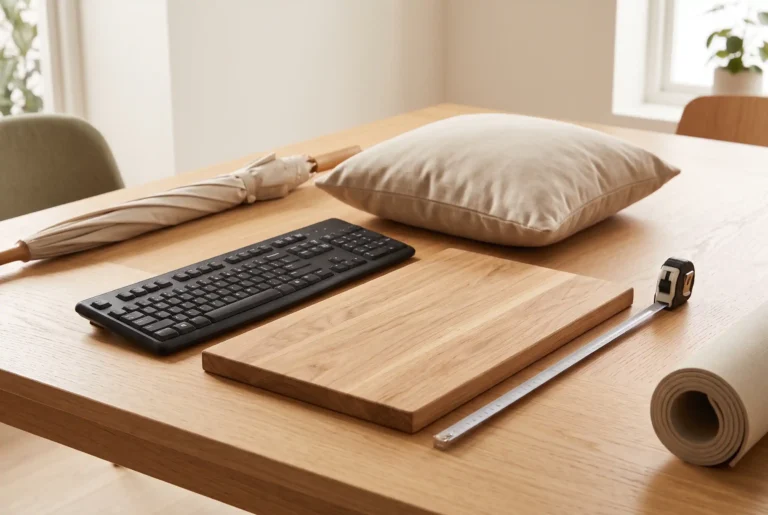
A correctly sized craft mat, scrapbook paper sheet, or 12-inch square board can serve as a convenient visual reference.
Choose something with a clearly specified edge measurement. Avoid products that are sold using nominal sizes unless you have checked their physical dimensions.
Method 5: Make a Reusable One-Foot Template
If you have access to a ruler just once, you can create a simple reference for future estimates.
- Place a straight strip of cardboard on a flat surface.
- Measure exactly 12 inches along the strip.
- Mark the starting and ending points clearly.
- Trim the strip or retain the marked measurement for later use.
- Store it in a drawer, toolbox, or craft kit.
This is often more dependable than memorizing the approximate sizes of irregular household objects.
Understanding Length, Width, Height, and Diameter
The phrase 12 inches long does not always describe the same physical dimension. The correct interpretation depends on the object’s shape and orientation.
Length
Length usually describes the measurement from one end of an object to the other along a chosen direction. A ruler’s measuring scale and a sandwich’s end-to-end distance are examples.
Width
Width generally measures an object from side to side. A 12-inch-wide shelf may be one foot across its front edge, even if its depth is considerably smaller.
Height
Height measures a vertical distance, such as the height of a stack of hockey pucks. A 12-inch-tall object reaches one foot above its supporting surface.
Diameter
Diameter is the distance across a circle through its center. A 12-inch record is 12 inches across, not 12 inches around its outer edge.
Its circumference is approximately 37.7 inches because circumference equals pi multiplied by diameter.
Diagonal Measurement
Television and laptop screen sizes are normally described by their diagonal measurements. A 12-inch diagonal screen does not have a 12-inch-wide display.
For example, a rectangular 12-inch screen with a 16:9 aspect ratio has an approximate visible width of 10.46 inches and height of 5.88 inches, assuming the 12-inch measurement applies to its display diagonal.
Understanding this difference helps prevent mistakes when comparing screen dimensions with shelves, bags, or workspaces.
What Can You Do With a 12-Inch Measurement?
One-foot measurements frequently appear in home organization, decorating, construction, crafts, and everyday shopping.
Planning Small Storage Spaces
Knowing what one foot looks like can help you estimate whether a storage basket, drawer organizer, or small box fits into an available space.
For example, if you have approximately 12 inches of usable shelf depth, any container that extends farther may stick out beyond the shelf.
Always allow additional clearance for handles, doors, and other nearby objects.
Choosing Kitchen Equipment
Cookware, pizza pans, cake boards, and serving trays often use inch-based dimensions. Visualizing 12 inches makes it easier to compare these products before purchasing them.
Do not overlook handles, rims, and accessories when checking whether equipment fits inside cabinets or ovens.
Measuring Craft and Art Projects
One foot is a practical length for paper crafts, cutting mats, decorative signs, and small artwork.
A 12-by-12-inch sheet also covers exactly one square foot, making it useful when estimating the surface area required for materials.
Checking Furniture and Decor Dimensions
Picture frames, wall shelves, decorative panels, and compact furniture accessories may be described in inches.
A one-foot reference helps you picture their dimensions before purchasing. For an accurate fit, compare the object’s complete exterior dimensions with the available space.
Common Mistakes When Estimating 12 Inches
Everyday objects are useful measurement references, but several mistakes can produce misleading estimates.
Assuming Every Product Has Exactly Its Advertised Size
Manufacturers sometimes use nominal measurements. A 12-inch tile, skillet, or picture frame may describe a particular feature rather than the full outside dimensions.
Before making a purchase, check which part of the item the measurement refers to.
Confusing Diameter With Circumference
A 12-inch pizza pan has a 12-inch diameter, but the distance around its circular edge is much greater.
Always distinguish between a straight measurement across an object and the curved distance around it.
Using Body Parts as Exact Measuring Tools
Some people estimate a foot using their forearm, hand span, or shoe length. These references can be convenient, but human body dimensions vary substantially.
If you want to use a personal reference, measure that body part first and remember its approximate length. Do not assume everyone has a 12-inch forearm or foot.
Confusing a One-Foot Length With One Square Foot
A foot measures distance, while a square foot measures area.
A square measuring 12 inches on every side covers one square foot. A rectangular object that measures 12 inches along one edge does not necessarily have an area of one square foot.
Relying on a Visual Estimate for Precision Work
A small error may be harmless when estimating the size of a gift box but troublesome when cutting a shelf or installing hardware.
Use a properly marked ruler or tape measure when dimensions affect fitting, assembly, alignment, or safety.
When Is an Approximate One-Foot Measurement Good Enough?
The level of accuracy you need depends on the consequences of getting the measurement slightly wrong.
| Situation | Is an Approximate Reference Enough? | Recommended Approach |
|---|---|---|
| Visualizing product size online | Usually | Compare with a familiar 12-inch object |
| Estimating gift box dimensions | Often | Use a ruler if packaging fit matters |
| Planning a decorative arrangement | For initial planning | Confirm dimensions before installation |
| Cutting shelving material | No | Use a reliable measuring tape |
| Checking appliance clearance | No | Measure the complete exterior dimensions |
| Installing construction hardware | No | Use accurate measurements and installation specifications |
As a simple rule, estimation is suitable for understanding scale. Precise measurement is necessary when an object must fit, align, or function within specific physical limits.
The Easiest Ways to Visualize 12 Inches
12 inches is exactly one foot, and familiar objects make that distance easier to recognize. A standard 12-inch ruler, full-size LP record, square scrapbook sheet, and appropriately sized kitchen items all offer useful references. For quick estimates, two U.S. dollar bills or the long edge of A4 paper provide measurements close to one foot.
The best reference depends on your purpose. If you only need to understand how large something looks, an everyday object is often sufficient. If you are measuring for furniture, construction, storage clearance, or an exact fit, use a measuring tool and verify the item’s complete dimensions.
Frequently Asked Questions
What common household item is exactly 12 inches long?
A standard 12-inch ruler provides a measuring scale that is exactly one foot long. A 12-by-12-inch scrapbook paper sheet is another convenient example, although manufacturing tolerances can affect physical dimensions slightly.
Is 12 inches exactly the same as 1 foot?
Yes, 12 inches equals exactly one foot in the U.S. customary measurement system. This is a defined relationship, not an approximation.
How long is 12 inches in centimeters?
12 inches equals exactly 30.48 centimeters, or 304.8 millimeters. The conversion uses the internationally defined relationship of 2.54 centimeters per inch.
Can I measure 12 inches using dollar bills?
Yes, two modern U.S. dollar bills placed end to end measure approximately 12.28 inches. This is slightly longer than one foot but useful for rough estimates.
Is a regular sheet of printer paper 12 inches long?
No, standard U.S. Letter paper is 11 inches long and 8.5 inches wide. A4 paper is longer at approximately 11.69 inches, making it closer to one foot.
Is a 12-inch pizza actually 12 inches across?
A pizza advertised as 12 inches generally refers to its intended diameter, which is the straight distance across the center. Actual baked pizzas and their crusts can vary, so the finished pizza may not measure exactly 12 inches.
Is a 12-inch ruler physically exactly 12 inches long?
The measurement from the zero mark to the 12-inch mark should represent one foot on a properly manufactured ruler. The ruler’s overall physical length may be slightly greater if its ends extend beyond those markings.
Can I use my forearm to estimate 12 inches?
You can use your forearm as a personal reference if you measure it beforehand. Wrist-to-elbow lengths differ between individuals, so an unmeasured forearm is not a dependable universal one-foot standard.