20 Common Things That Are 102 Inches Long (Real-Life Examples)
102 inches is exactly 8 feet 6 inches, or 8.5 feet (259.08 centimeters). To picture this length, imagine a large sectional sofa, an extended dining table, or a recreational kayak measuring 8 feet 6 inches from end to end. It is also 6 inches longer than 8 feet and 22 inches taller than a typical 80-inch interior door.
Although 102 inches is not a universal standard size for household products, plenty of furniture, sporting equipment, storage systems, and custom-built features can measure this length. The examples below explain 20 realistic ways to visualize 102 inches, along with accurate conversions, practical comparisons, and measuring advice. For more helpful measurement guides, visit Snap Planets.
Key Takeaways
- 102 inches equals exactly 8 feet 6 inches, 8.5 feet, 259.08 centimeters, or 2.5908 meters.
- Large sectional sofas, long dining tables, media consoles, and custom shelves can measure approximately 102 inches.
- An 8-foot object measures 96 inches, making it exactly 6 inches shorter than 102 inches.
- A typical 80-inch interior door is 22 inches shorter than 102 inches, providing a useful visual comparison.
- When purchasing furniture or planning renovations, use a tape measure because product dimensions and installation clearances vary.
How Long Is 102 Inches? Exact Conversions and Size Comparisons
102 inches is a little over eight feet long. More precisely, it equals 8 feet and 6 inches, which is halfway between 8 and 9 feet.
Because one foot contains exactly 12 inches, converting 102 inches into feet requires dividing 102 by 12:
102 ÷ 12 = 8.5 feet.
For metric measurements, each inch equals exactly 2.54 centimeters. Multiplying 102 by 2.54 produces 259.08 centimeters.
102 Inches Conversion Table
| Measurement Unit | Equivalent of 102 Inches |
|---|---|
| Feet and inches | 8 feet 6 inches |
| Decimal feet | 8.5 feet |
| Yards | 2.8333 yards (approximately) |
| Centimeters | 259.08 cm |
| Millimeters | 2,590.8 mm |
| Meters | 2.5908 m |
| Feet as a fraction | 8½ feet |
How Does 102 Inches Compare With Familiar Measurements?
Comparing 102 inches with recognizable dimensions makes the distance easier to understand.
| Reference | Length | Comparison With 102 Inches |
|---|---|---|
| Standard yard | 36 inches | 102 inches is 2.83 times as long. |
| Typical interior door height | 80 inches | 102 inches is 22 inches taller. |
| Standard king mattress length | 80 inches | 102 inches is 22 inches longer. |
| 8-foot board | 96 inches | 102 inches is 6 inches longer. |
| 9-foot board | 108 inches | 102 inches is 6 inches shorter. |
| 10-foot length | 120 inches | 102 inches is 18 inches shorter. |
One of the simplest visualizations is an 8-foot board with another 6 inches added. That gives you exactly 102 inches without requiring an unusual reference object.
Is 102 Inches Considered Long?
Yes, 102 inches is a substantial measurement for household furnishings, storage, and interior design. A furniture piece spanning 8.5 feet can occupy much of a small room’s wall and may require careful planning around doorways and walkways.
However, the same length is relatively modest for outdoor structures, boats, or commercial equipment. Whether 102 inches seems large depends on the type of object being measured.
20 Everyday Things That Can Measure 102 Inches Long
The following examples come from homes, offices, workshops, recreational activities, and outdoor spaces. Some products are available in approximately this size, while others can be built or combined to reach exactly 102 inches.
Important: These are real-world size examples, not claims that every object in each category has a standardized 102-inch dimension. Always check an individual product’s measurements when precision matters.
1. Large Sectional Sofa
A large sectional sofa is one of the easiest ways to picture 102 inches. Some L-shaped and modular sectionals extend approximately 8.5 feet along their longest side, making them prominent pieces of living room furniture.
A 102-inch sectional can provide seating for several people, although actual capacity depends on cushion widths, armrests, and the seating arrangement.
When measuring a sectional, distinguish between its overall width and chaise depth. An L-shaped sofa might measure 102 inches across one side while extending a different distance into the room.
2. Extra-Long Straight Sofa
Oversized straight sofas can also approach 102 inches in overall width. Unlike sectional sofas, these furniture pieces generally form a single continuous seating arrangement without a perpendicular chaise.
A sofa measuring 102 inches wide is considerably longer than many compact loveseats and standard apartment sofas.
Before purchasing one, measure the wall, door openings, and route into the room. A sofa that fits the designated wall might still be difficult to move around narrow hallway corners.
3. Large Dining Table
Dining tables designed for larger families or frequent entertaining can reach approximately 102 inches long. This gives an excellent reference for imagining 8.5 feet in a dining room.
A table of this length may accommodate eight people, sometimes more, depending on table width, chair design, and how much elbow room is available.
Remember that the table itself is only part of the required space. Chairs need clearance for people to sit down, stand up, and move comfortably.
4. Extended Dining Table With Leaves
An extendable dining table can reach exactly 102 inches when its extension leaves are installed.
For example, a table measuring 78 inches without extensions would reach 102 inches after adding two 12-inch leaves.
This arrangement is useful for households that want a compact everyday table but occasionally require additional seating. Check the manufacturer’s specifications because extension sizes differ between models.
5. Wide Entertainment Center or Media Console
Large entertainment centers and media consoles can measure around 102 inches wide, particularly models designed to occupy substantial portions of an entertainment wall.
Such furniture may provide storage for electronics, gaming systems, media accessories, and decorative items.
When planning a TV setup, check the console’s actual width rather than relying on the television’s advertised diagonal screen size. A television’s diagonal measurement does not equal its horizontal width.
6. Long Wall-Mounted Floating Shelf
A custom floating shelf measuring 102 inches can extend across a living room, home office, or display wall.
For example, a woodworker might create an 8-foot-6-inch shelf to display books, framed photographs, artwork, or decorative objects.
Because a shelf of this length can carry considerable weight, proper support is essential. Its construction, bracket spacing, wall attachment, and load capacity must be suitable for what it will hold.
7. Tall Custom Bookshelf
A built-in bookshelf can stand 102 inches tall, particularly in a room with a 9-foot ceiling.
A 9-foot ceiling measures 108 inches, so a 102-inch bookshelf leaves 6 inches between its top and the ceiling before accounting for trim or other installation details.
This type of storage arrangement can use vertical wall space efficiently. Tall freestanding furniture should also be secured appropriately to reduce the risk of tipping.
8. Custom Closet Organizer
A walk-in closet might include a 102-inch-wide storage system combining hanging sections, shelves, and drawers.
For instance, three connected modules could measure 30, 36, and 36 inches wide, totaling exactly 102 inches.
This length can accommodate several clothing-storage functions along a single wall. Installers must also account for baseboards, uneven walls, door swings, and assembly clearance.
9. Long Conference Table
Conference tables are another practical example of furniture that can measure approximately 102 inches long.
An 8.5-foot meeting table provides a substantial shared surface for laptops, paperwork, notebooks, and other office equipment.
Its seating capacity depends on table shape, chair width, pedestal placement, and room layout. Measuring the occupied footprint with chairs pulled out is more useful than considering table length alone.
10. Dual-Desk Office Workstation
Two desks measuring 51 inches wide each will occupy exactly 102 inches when positioned side by side without a gap.
This combination is useful for visualizing the measurement in a home office, shared studio, or professional workspace.
It can accommodate two separate work areas while using one continuous section of wall. For an exact fit, consider any protruding desktop edges, cable trays, and gaps required between the units.
11. Extended Workshop Workbench
A workshop workbench can be constructed 102 inches long to provide space for woodworking, assembly, repairs, or hobby projects.
This length allows different work zones to be arranged across one surface, such as a cutting area, an assembly area, and a tool-storage area.
For a custom bench, the length is straightforward to specify. Structural strength depends on the materials, supports, fastening methods, and intended loads.
12. Kitchen Island Countertop
Large residential kitchens sometimes use islands approaching 102 inches in length. At 8.5 feet, an island of this size can accommodate food preparation, storage, and seating if the overall layout permits.
For example, a custom kitchen island could include cabinets along one side and an overhanging countertop along another.
However, 102 inches is not a universal standard island size. Countertop length should be selected based on the room’s dimensions, appliance access, circulation space, and usable work areas.
13. Long Kitchen or Utility Counter
A continuous countertop spanning 102 inches offers a convenient comparison in kitchens, laundry rooms, and utility spaces.
Custom cabinet installations may create this length by joining multiple cabinet sections beneath a single countertop.
For example, cabinets measuring 36, 30, and 36 inches wide would total 102 inches before any fillers or installation adjustments.
For countertop fabrication, confirm the finished length, wall shape, overhangs, and any required cuts.
14. Custom Floor-Length Curtains
A curtain panel can be made with a finished length of 102 inches from its designated measuring point to the bottom hem.
This size may work in rooms with taller ceilings, depending on the curtain rod’s mounting height and whether the fabric should hover above, touch, or pool on the floor.
Curtains are often offered in preset lengths such as 96 or 108 inches, so 102 inches may require alterations or custom ordering.
The correct measurement depends on the hanging method, including hooks, rings, grommets, and rod placement.
15. Eight-and-a-Half-Foot Recreational Kayak
An 8-foot-6-inch kayak measures exactly 102 inches from bow to stern. Some compact recreational and youth-oriented kayaks are produced in this general length range.
A shorter kayak can be easier to store and maneuver than a much longer touring kayak, although handling characteristics also depend on hull design, width, and other factors.
When comparing kayak specifications, check the manufacturer’s stated overall length. A model described as approximately 8.5 feet may have an actual dimension slightly above or below 102 inches.
16. Eight-Foot-Six-Inch Stand-Up Paddleboard
Some compact stand-up paddleboards are designed with an 8-foot-6-inch length, which equals exactly 102 inches.
Boards around this size may be intended for children, smaller riders, surfing, or specialized recreational uses rather than general-purpose adult touring.
A paddleboard’s suitability cannot be determined from length alone. Width, thickness, volume, construction, rider weight, and intended activity are also important.
17. Eight-Foot-Six-Inch Fishing Rod
Fishing rods are manufactured in many different lengths, including 8 feet 6 inches. A rod with this specified length measures 102 inches when fully assembled and measured according to the manufacturer’s rod-length convention.
Longer fishing rods can be useful for certain casting and line-control techniques, although the ideal rod depends on the fishing environment and target species.
Some rods are divided into sections for transportation. Their packed length is therefore considerably shorter than the assembled 102-inch rod.
18. Custom Outdoor Bench
A long garden or patio bench could be built to a total length of 102 inches. Such a bench can provide seating along a deck, fence, porch, or landscaped area.
Custom construction makes it possible to fit the bench into a specific space rather than relying on preset furniture dimensions.
For outdoor installations, select materials and fasteners appropriate for weather exposure. Seating support and load capacity should be designed for the number of intended users.
19. Raised Garden Bed
A raised garden bed measuring 102 inches long is 8.5 feet from end to end. It can be constructed from suitable lumber, masonry, metal panels, or other garden-bed materials.
The width and height can be selected independently of the length. For example, a raised bed could be 102 inches long and 36 inches wide.
A bed approximately 3 feet wide allows many gardeners to reach toward the middle from both sides, provided that both sides remain accessible.
Long beds may require additional structural support to prevent the sides from bowing outward under soil pressure.
20. Garage Wall Storage Rail
A custom garage storage rail can extend 102 inches across a wall, offering space for hanging tools, garden equipment, and household accessories.
One way to create this dimension is to install compatible sections totaling 8 feet 6 inches. For example, an 8-foot section plus a 6-inch section would equal 102 inches if the components and mounting system permit that arrangement.
For a functional installation, the wall construction, mounting locations, hardware, and total weight of stored equipment matter more than the rail’s length alone.
Quick Reference: 20 Objects That Can Be 102 Inches Long
This table summarizes the examples and identifies which dimension is being compared with 102 inches.
| Object | 102-Inch Dimension | Measurement Type |
|---|---|---|
| Large sectional sofa | Longest side | Overall furniture width |
| Extra-long sofa | End to end | Overall width |
| Large dining table | End to end | Table length |
| Extendable dining table | With leaves installed | Extended length |
| Media console | Side to side | Overall width |
| Floating shelf | End to end | Shelf length |
| Custom bookshelf | Floor to top | Overall height |
| Closet organizer | Across connected modules | Combined width |
| Conference table | End to end | Table length |
| Dual workstation | Two 51-inch desks | Combined width |
| Workshop bench | End to end | Work surface length |
| Kitchen island | Across countertop | Countertop length |
| Utility counter | Along wall | Countertop length |
| Custom curtain | Top measuring point to hem | Panel length |
| Recreational kayak | Bow to stern | Hull length |
| Stand-up paddleboard | Nose to tail | Board length |
| Fishing rod | Fully assembled | Rod length |
| Outdoor bench | End to end | Overall length |
| Raised garden bed | Along longer side | Bed length |
| Garage storage rail | End to end | Installed rail length |
These measurements are examples of possible dimensions. They should not be interpreted as guaranteed sizes for every product in the listed categories.
How to Visualize 102 Inches Without a Tape Measure
You can estimate 102 inches using familiar measurements. The most dependable methods involve objects with known sizes rather than body parts, whose dimensions vary considerably.
Use an 8-Foot Reference Plus 6 Inches
If you have access to an object that is actually 8 feet long, imagine another 6 inches extending beyond one end.
The calculation is exact:
96 inches + 6 inches = 102 inches.
This method is especially useful when working with lumber or planning spaces where an 8-foot measurement is already marked.
Picture an Interior Door Plus 22 Inches
A typical American interior door slab is 80 inches tall. Adding 22 inches produces 102 inches.
Because 22 inches is almost 2 feet, 102 inches is noticeably taller than the door itself.
Remember that door heights can differ, especially in newer homes, remodeled spaces, and commercial buildings.
Imagine Three Yardsticks Minus 6 Inches
One yardstick measures 36 inches. Three yardsticks placed end to end measure 108 inches.
Subtract 6 inches, and the remaining length is exactly 102 inches.
This comparison can be helpful in classrooms, workshops, and home projects where yardsticks are available.
Use a Premeasured Walking Pace
Walking steps can provide a rough estimate, but step length differs significantly between individuals and walking conditions.
For example, if you have personally measured your normal step length at 30 inches, three steps cover approximately 90 inches, leaving 12 inches to reach 102.
This technique is suitable for estimating available space, not for cutting materials or selecting furniture that must fit precisely.
Use Your Own Height as a Reference
If you know your height, you can use it as a mental comparison.
For example, a person who is 5 feet 8 inches tall measures 68 inches. One and a half times that height equals exactly 102 inches.
This is a convenient visualization, but it works precisely only for the specified 68-inch height.
Where Does a 102-Inch Measurement Matter Most?
Understanding 102 inches is especially valuable when you need to determine whether an object will fit into a particular space.
Furniture Shopping and Room Planning
A sectional sofa or long dining table measuring 102 inches can occupy a substantial portion of a room.
Before purchasing, measure the available wall or floor area and consider nearby obstacles, including doors, heating vents, windows, and electrical outlets.
For seating furniture, account for the space people will need to move around it. An item fitting between two walls does not necessarily mean the room will remain comfortable to use.
Kitchen and Home Renovation Projects
Countertops, custom shelves, storage units, and built-in furniture may all require accurate measurements near 102 inches.
Converting 102 inches into 8 feet 6 inches is useful because construction materials and floor plans in the United States are commonly labeled in feet and inches.
However, never assume the wall or floor is perfectly straight. Check dimensions at several points when ordering fitted cabinetry or countertops.
Garage Organization and Storage
An 8.5-foot wall section can hold an extended storage system, shelving arrangement, or workbench.
Measure the actual usable space, accounting for garage door tracks, outlets, framing, vehicle clearance, and other obstructions.
Also confirm that longer materials can be transported into the garage before constructing or purchasing storage equipment.
Transporting Long Objects
A 102-inch item is longer than the internal length of many passenger vehicle cargo compartments.
Whether it fits inside a particular vehicle depends on the vehicle’s cargo dimensions, seat configuration, and the object’s width and shape.
For long cargo, consult vehicle and load-securing guidance. Never assume that a lowered pickup tailgate creates a specific total cargo length or that an unsupported object can be transported safely.
Important Measurement Mistakes to Avoid
Several misunderstandings can cause problems when estimating or purchasing objects around 102 inches long.
Confusing Overall Length With Usable Length
A sofa may measure 102 inches from outside armrest to outside armrest, but its usable seating width will be shorter.
Likewise, a storage cabinet’s overall width includes its side panels, while its internal storage area is smaller.
Always identify the exact dimension the manufacturer is describing.
Assuming 102 Inches Is a Standard Product Size
Although many products can measure 102 inches, it is not the standard dimension for every type of furniture or household equipment.
For example, single-car garage doors are commonly sold in nominal widths such as 8 or 9 feet, rather than being universally standardized at 102 inches.
Similarly, standard king mattresses measure 76 inches wide by 80 inches long in the United States, not 102 inches in either mattress dimension.
Confusing Official Sports Dimensions
Some sports equipment measurements are easy to misinterpret.
For example, a regulation bowling lane is approximately 41.5 inches wide, not 102 inches. The United States Bowling Congress equipment specifications provide detailed bowling equipment and lane requirements.
A standard competition gymnastics balance beam is also much longer than 102 inches, measuring 5 meters, or approximately 197 inches.
For billiards, a 9-foot tournament pool table typically has a playing surface measuring 100 inches by 50 inches, not 102 inches by 51 inches.
The key lesson is to distinguish an approximate visual comparison from an actual sporting regulation.
Forgetting About Furniture Clearance
An object that is 102 inches long requires more than 102 inches of available space if access, ventilation, assembly, or movement clearance is necessary.
For example, a 102-inch table might fit along a 108-inch wall, but the remaining 6 inches would not provide meaningful space for chairs at both ends.
Consider the entire room layout instead of focusing only on the object’s nominal length.
How to Measure 102 Inches Accurately
For furniture placement, construction, or equipment installation, measuring with a proper tool is more dependable than relying on visual comparisons.
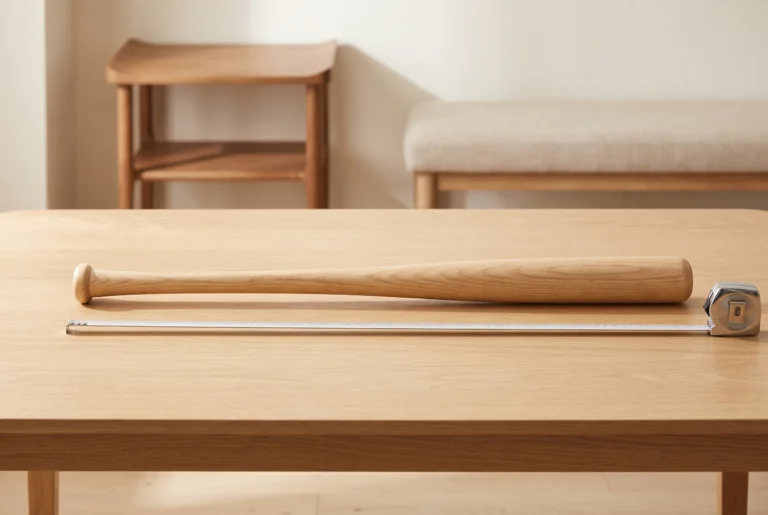
- Choose a suitable tool. A 12-foot or longer tape measure is convenient for measuring 102 inches in one continuous length.
- Mark the starting point. Position the tape’s zero point at the beginning of the intended measurement.
- Extend the tape straight. Avoid bending, twisting, or allowing the tape to sag when possible.
- Locate the 102-inch mark. On a tape marked in feet and inches, find the 8-foot mark and continue another 6 inches.
- Mark the endpoint. Use a pencil or removable marker suitable for the surface.
- Verify the measurement. Measure again, particularly before cutting expensive materials or ordering custom furniture.
For room planning, a helpful additional technique is to place painter’s tape on the floor outlining the planned furniture footprint. This allows you to evaluate the space visually before making a purchase.
102 Inches vs. 96, 100, 108, and 120 Inches
Small differences become significant when you are selecting a piece of furniture or planning installation clearances.
| Length in Inches | Feet and Inches | Difference From 102 Inches |
|---|---|---|
| 96 inches | 8 feet | 6 inches shorter |
| 100 inches | 8 feet 4 inches | 2 inches shorter |
| 102 inches | 8 feet 6 inches | Exact reference length |
| 108 inches | 9 feet | 6 inches longer |
| 120 inches | 10 feet | 18 inches longer |
In practical terms, a 102-inch sofa is only 6 inches longer than a 96-inch sofa, but those additional inches can affect whether it fits beside a doorway or cabinet.
Similarly, the difference between a 102-inch counter and a 108-inch counter may determine whether there is enough room for an adjacent appliance or another feature.
Is a 102-Inch TV Really 102 Inches Wide?
No. A television advertised as 102 inches is generally being described by its screen diagonal, not its physical width.
For a 16:9 screen with a 102-inch diagonal, the approximate visible screen dimensions are:
- Width: 88.9 inches.
- Height: 50.0 inches.
- Diagonal: 102 inches.
These calculations describe the screen geometry, not an individual television model. Bezels, frames, and other design features can increase the product’s overall dimensions.
This distinction matters when selecting a TV stand, planning wall mounting, or comparing television sizes with furniture widths.
A 102-inch-wide media console is therefore substantially wider than the visible screen of a 102-inch diagonal television with a 16:9 aspect ratio.
Practical Tips for Choosing Furniture Around 102 Inches
If you are considering a product measuring 8.5 feet long, a few simple checks can help prevent expensive sizing mistakes.
- Check the full product dimensions. Record width, depth, and height instead of focusing only on the 102-inch measurement.
- Measure the delivery route. Verify doorways, staircases, hallways, and corners before ordering oversized furniture.
- Check assembly requirements. Some furniture is assembled in place, while other pieces are delivered fully built.
- Allow functional clearance. Include room for walking, cabinet doors, drawers, chairs, and other moving parts.
- Account for room features. Baseboards, radiators, outlets, and sloping walls may affect installation.
- Verify custom measurements. For fitted furniture and countertops, confirm final dimensions with the installer or fabricator.
A 102-inch object can be an excellent fit in the right setting, but its usefulness depends on much more than length alone.
Understanding 102 Inches in Everyday Life
102 inches equals exactly 8 feet 6 inches, making it easy to compare with an 8-foot board plus another 6 inches. Large sofas, dining tables, custom shelving, workbenches, kayaks, and garden structures are all practical examples of objects that can measure approximately or exactly this length.
For quick visualization, think of a substantial 8.5-foot furniture piece or a measurement halfway between 8 and 9 feet. For actual purchases and home projects, confirm the specific object’s dimensions and available clearance rather than relying on typical product sizes or estimates.
Frequently Asked Questions
How many feet are in 102 inches?
102 inches equals exactly 8.5 feet, or 8 feet 6 inches. Divide 102 by 12 to convert inches into decimal feet.
How many centimeters is 102 inches?
102 inches equals exactly 259.08 centimeters. The conversion uses 2.54 centimeters per inch, so multiplying 102 by 2.54 gives the result.
Is 102 inches the same as 9 feet?
No, 9 feet equals 108 inches. A length of 102 inches is exactly 6 inches shorter than 9 feet.
What common furniture can measure 102 inches?
Large sectional sofas, oversized straight sofas, dining tables, conference tables, and wide media consoles can measure approximately 102 inches. The actual dimensions vary by model and manufacturer, so check individual product specifications.
Is 102 inches longer than a standard door?
Yes, 102 inches is 22 inches longer than the height of a typical 80-inch interior door slab. Some residential and commercial doors are taller, so the comparison is not universal.
How many yards is 102 inches?
102 inches equals approximately 2.83 yards. Because one yard contains 36 inches, dividing 102 by 36 gives 2.8333 repeating yards.
Can I fit a 102-inch sofa in a 9-foot space?
A 9-foot space measures 108 inches, which is 6 inches longer than a 102-inch sofa. Although the sofa may physically fit along that span, check baseboards, access, nearby furniture, and any clearance recommended by the manufacturer.
How can I measure 102 inches without a ruler?
Use a known 8-foot length and add another 6 inches, or place three 36-inch yardsticks end to end and subtract 6 inches. If you do not have a reliably measured reference, use visual estimates only for rough planning, not precision work.