18 Everyday Things That Are 16 Inches Long: A Practical Size Guide
Sixteen inches is exactly 1 foot 4 inches, or 40.64 centimeters. To picture that length, imagine a 16-inch pizza measured across its diameter, one side of a 16-by-16-inch throw pillow, or a 16-inch ruler with four extra inches beyond a standard 12-inch ruler. These familiar objects make it easier to understand how long 16 inches really is.
Below are 18 practical examples, accurate unit conversions, and simple methods for estimating 16 inches without a measuring tape. You’ll also learn which measurements are exact, which are approximate, and how to avoid common measuring mistakes. For more everyday measurement guides, visit Snap Planets.
Key Takeaways
- 16 inches equals exactly 40.64 centimeters, 406.4 millimeters, or 1 foot 4 inches.
- A pizza labeled 16 inches across, a 16-inch shelf, and a 16-by-16-inch pillow provide useful visual references.
- Laptop screen sizes are measured diagonally, while pizzas and clocks are measured across their diameters.
- Two standard 8-inch building blocks or eight identical 2-inch objects can demonstrate 16 inches when their dimensions are verified.
- For accurate measurements, use a ruler or tape measure because household objects often vary from their advertised sizes.
How Long Is 16 Inches? Exact Measurements and Visual Comparisons
Sixteen inches is one-third longer than 12 inches. It is also 4 inches shorter than 20 inches, making it a convenient reference for measuring small furniture, household accessories, computer screens, and kitchen equipment.
In everyday terms, 16 inches is slightly longer than the short side of a typical 11-by-14-inch picture frame and noticeably shorter than the width of a standard 18-inch throw pillow.
16 Inches in Other Units
The following conversions use the international definition of an inch, which equals exactly 2.54 centimeters.
| Measurement Unit | Equivalent to 16 Inches | Accuracy |
|---|---|---|
| Inches | 16 in | Exact |
| Feet and inches | 1 ft 4 in | Exact |
| Decimal feet | 1.3333 ft | Rounded |
| Centimeters | 40.64 cm | Exact |
| Millimeters | 406.4 mm | Exact |
| Meters | 0.4064 m | Exact |
| Yards | 0.4444 yd | Rounded |
Comparing 16 Inches With Common Lengths
| Reference Length | Difference From 16 Inches |
|---|---|
| 6-inch ruler | 10 inches shorter |
| 12-inch school ruler | 4 inches shorter |
| 14-inch object | 2 inches shorter |
| 16-inch object | Same length |
| 18-inch object | 2 inches longer |
| 24-inch object | 8 inches longer |
An especially useful comparison is a standard school ruler. Place a 12-inch ruler on a flat surface, then extend the measurement another 4 inches. That combined distance is exactly 16 inches.
18 Common Things That Are 16 Inches Long or Close to It
Some everyday objects are manufactured in 16-inch sizes, while others come reasonably close. The important distinction is whether the measurement describes the object’s length, width, height, diameter, or diagonal.
Here is a quick overview before looking at each example in detail.
| Everyday Object | Dimension to Compare | Measurement Note |
|---|---|---|
| 16-inch pizza | Diameter | Nominally 16 inches |
| Kitchen cutting board | Long side | 16-inch models available |
| Large serving platter | Diameter or length | 16-inch options available |
| Rectangular baking pan | Outer length | Some measure 16 inches |
| 16-inch laptop display | Diagonal | Nominal screen size |
| 16-inch portable monitor | Diagonal | Nominal screen size |
| Wall clock | Outer diameter | 16-inch models available |
| Windshield wiper blade | Blade length | 16-inch replacement size |
| Square throw pillow | One side | 16-by-16-inch nominal size |
| Floating wall shelf | Overall length | 16-inch models available |
| Desk drawer | Front-to-back depth | Some are around 16 inches |
| Magnetic tool holder | Overall length | 16-inch models available |
| Children’s bicycle wheel | Nominal wheel diameter | 16-inch wheel-size designation |
| Skateboard wheelbase | Axle-to-axle distance | Some longer setups approach 16 inches |
| Candlepin bowling pin | Height | Approximately 16 inches |
| A2 paper | Short side | 16.54 inches |
| Two wooden pencils | Combined length | Usually around 15 inches |
| 16 one-inch cubes | Combined length | Exactly 16 inches if each cube is 1 inch |
1. A 16-Inch Pizza
A pizza sold as 16 inches in diameter provides one of the easiest visual references. The measurement runs straight across the center from one edge of the crust to the opposite edge.
A 16-inch circular pizza has a radius of 8 inches and an area of approximately 201 square inches. Actual dimensions can vary slightly because dough is stretched and baked, but the nominal diameter is a useful reference.
Remember that not every pizza labeled large is 16 inches. Pizza size categories vary between restaurants, so check the stated diameter rather than relying on the word large.
2. A 16-Inch Kitchen Cutting Board
Rectangular cutting boards are available in dimensions such as 16 by 10 inches or 16 by 12 inches. The longer edge gives you a convenient 16-inch reference.
A cutting board of this length offers room for preparing vegetables, slicing bread, and handling everyday ingredients. The exact dimensions depend on the manufacturer, and boards with handles may have a different overall length than their usable cutting surfaces.
For a reliable visual estimate, look for a board specifically labeled 16 inches long.
3. A Large Serving Platter
Large round platters can measure 16 inches across, while oval and rectangular serving trays may measure 16 inches along their longest dimension.
These dishes are useful for presenting appetizers, roasted vegetables, desserts, and shared meals. A 16-inch round platter is noticeably wider than an ordinary dinner plate.
If you use an oval platter as a reference, measure the long axis rather than the narrow width.
4. A Rectangular Baking Pan
Some roasting pans, cookie sheets, and rectangular baking trays have an overall length of approximately 16 inches.
The main detail to check is whether the listed measurement refers to the pan’s exterior, interior cooking area, or rim-to-rim distance. Handles and raised edges may add length beyond the flat cooking surface.
A labeled 16-inch baking pan can help you estimate cabinet clearance or visualize the space needed on a kitchen countertop.
5. A 16-Inch Laptop Screen
A laptop advertised with a 16-inch display has a screen with a nominal diagonal measurement of 16 inches. The diagonal runs from one corner of the display area to the opposite corner.
It does not mean that the laptop is 16 inches wide. For example, a 16-inch display with a 16:10 aspect ratio has an approximate screen width of 13.57 inches and height of 8.48 inches.
The laptop’s full outside dimensions will also include bezels and the surrounding enclosure. This makes screen size useful for understanding diagonal distance but less helpful for estimating straight horizontal width.
6. A 16-Inch Portable Monitor
Portable computer monitors are also offered with 16-inch diagonal displays. They provide a familiar reference for people who use an additional screen with a laptop.
As with built-in laptop displays, the diagonal size does not represent the width of the device. A monitor with a different aspect ratio can have a different width and height despite sharing the same diagonal measurement.
When comparing the monitor with a physical object, imagine the line connecting opposite corners rather than the horizontal edge.
7. A 16-Inch Wall Clock
Round wall clocks are available with an outer diameter of 16 inches, providing another recognizable size reference.
Imagine a circle measuring slightly over 40 centimeters across. That is enough surface area for large numerals and hands to be visible from different positions in a room, depending on the clock’s design.
Decorative clock frames may extend beyond the dial itself. Use the manufacturer’s overall diameter if you need the full 16-inch reference.
8. A 16-Inch Windshield Wiper Blade
Automotive replacement wiper blades are sold in many lengths, including 16 inches. A blade marked 16 inches provides a useful long, narrow example.
Wiper lengths are selected to match the vehicle’s windshield and wiper-arm design. The driver’s side and passenger’s side may require different lengths, and rear wipers often use separate sizes.
For vehicle maintenance, never choose a wiper based only on its visual similarity to an old blade. Confirm the correct fitment for your vehicle’s year, make, model, and wiper position.
9. A 16-by-16-Inch Throw Pillow
A square decorative pillow labeled 16 by 16 inches is designed around a nominal measurement of 16 inches along each side.
This is particularly helpful because you can imagine the distance horizontally or vertically. The pillow is a soft object, however, so its visible dimensions can change depending on the amount of filling and how it is positioned.
For greater consistency, measure the flat pillow cover along its seams rather than across the curved surface of a stuffed pillow.
10. A 16-Inch Floating Shelf
Small wall-mounted shelves come in various lengths, including 16 inches. A shelf labeled 16 inches long illustrates the distance as a straight horizontal span.
This size can be useful for displaying small plants, framed photos, and lightweight household accessories, provided the shelf’s load rating and mounting system are appropriate.
Do not assume a shelf’s width corresponds to wall-stud spacing. Brackets, anchors, and mounting holes vary, so always follow the hardware manufacturer’s installation instructions.
11. A Desk Drawer Approximately 16 Inches Deep
Some office and writing desks have drawers around 16 inches deep, measured from the inside front toward the back.
This example helps visualize 16 inches as a front-to-back distance rather than a horizontal width. It is especially relevant when planning furniture placement or checking whether organizers will fit.
Drawer dimensions vary considerably. The inside usable depth may also be shorter than the full outside measurement because of the drawer front and rear panel.
12. A 16-Inch Magnetic Tool Holder
Magnetic tool bars are available in 16-inch lengths and can hold suitable metal tools along a wall or workbench.
They provide a simple visual reference because they are relatively straight and rigid. Unlike a soft pillow or irregularly shaped kitchen item, a rigid tool bar has a clearly defined overall length.
Check whether the product’s stated length includes end caps. Mounting holes may not be positioned 16 inches apart even if the bar itself is 16 inches long.
13. A Children’s Bicycle With 16-Inch Wheels
Children’s bicycles are often categorized by nominal wheel diameter, including 16-inch wheel sizes.
These bikes can be suitable for some young riders, but wheel size alone does not determine proper fit. Height, inseam, reach, and the ability to handle the bicycle comfortably are more important than choosing solely by age.
Also, a bicycle’s nominal wheel-size designation should not be treated as a guaranteed exact outside diameter. Actual tire dimensions depend on the tire and rim system.
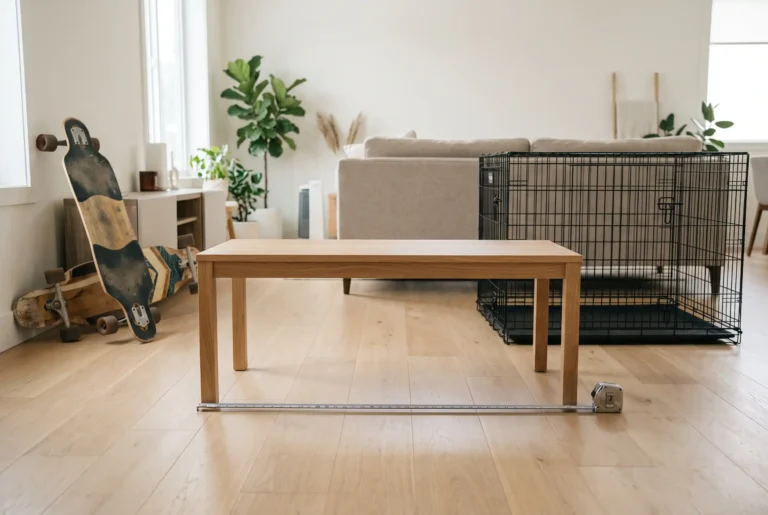
14. A Skateboard With a Wheelbase Near 16 Inches
Some longer skateboard decks, particularly certain transition, cruiser, and old-school designs, have a wheelbase approaching or reaching 16 inches.
The wheelbase is the distance between the centers of the front and rear truck axles. It is not the overall deck length or the distance between the outer ends of the wheels.
Many standard street skateboards have shorter wheelbases, so a 16-inch wheelbase is not a universal skateboard dimension. Check the particular deck specifications before using one as a reference.
15. A Candlepin Bowling Pin
Candlepin bowling uses tall, slender pins that stand approximately 16 inches high. This makes them an interesting sports-related height comparison.
Unlike the wider pins used in tenpin bowling, candlepins have a relatively narrow, nearly cylindrical profile. They are particularly associated with bowling traditions in parts of New England and eastern Canada.
For everyday estimation, the approximate height is helpful, but a physical measuring tool is preferable when an exact 16-inch dimension is needed.
16. The Short Side of A2 Paper
An A2 sheet measures exactly 420 by 594 millimeters under the ISO A-series nominal paper dimensions.
Its shorter side is 42 centimeters, or approximately 16.54 inches. That makes it just over half an inch longer than 16 inches.
A2 paper is used for posters, technical drawings, artwork, and other larger-format printed materials. It provides a particularly useful metric comparison because the dimensions are standardized.
Note that U.S. letter-size paper is much smaller, measuring 8.5 by 11 inches. Two U.S. letter sheets are not the same size as one A2 sheet.
17. Two Unsharpened Wooden Pencils
A typical new wooden pencil is often around 7.5 inches long, although its precise length depends on the model.
Two such pencils placed end to end would measure approximately 15 inches. That is 1 inch short of the target, making them a reasonable rough reference rather than an exact match.
If you want to demonstrate 16 inches using pencils, measure both first and add a known amount to make up the difference. Sharpened or previously used pencils will generally be shorter.
18. Sixteen One-Inch Cubes
Sixteen cubes measuring exactly 1 inch along each edge can be arranged in a straight row to make a 16-inch length.
This is one of the most straightforward ways to demonstrate the measurement in a classroom or at home. Unlike relying on paper clips, which come in several sizes, calibrated one-inch cubes provide a consistent reference.
Place the cubes directly against each other with no gaps, and measure along one straight edge. Sixteen times 1 inch equals exactly 16 inches.
How to Measure 16 Inches Without a Tape Measure
You can estimate 16 inches with familiar objects, but the reliability of your result depends on whether their dimensions are standardized and known.
Method 1: Use a 12-Inch Ruler
- Place the ruler on a level surface with its zero mark aligned to the starting point.
- Mark the location of the 12-inch measurement.
- Move the ruler so its zero mark aligns with the 12-inch mark.
- Measure another 4 inches in the same direction.
- The complete distance from the original starting point to the new mark is 16 inches.
This is a reliable approach with an accurately printed or manufactured ruler, provided both segments follow the same straight line.
Method 2: Use Four 4-Inch Segments
If you have a known 4-inch reference, repeat it four times in a straight line.
The arithmetic is simple: 4 + 4 + 4 + 4 = 16 inches. This works best with rigid pieces that have been measured accurately, since small errors can accumulate each time you move an object.
Method 3: Use Standard Letter Paper for a Rough Estimate
U.S. letter paper measures 8.5 by 11 inches. Two sheets placed end to end along their shorter 8.5-inch sides span 17 inches.
That is 1 inch longer than the desired measurement. Subtracting an inch with a known reference gives you an accurate 16-inch distance, while the full two-sheet length is useful only as an estimate.
Method 4: Compare Against a Known 16-Inch Household Item
A rigid cutting board, shelf, or other object specifically labeled 16 inches long may be used as a reference. First verify the actual dimension if precision matters.
Position it against the space you want to estimate. Avoid relying on rounded edges, decorative projections, or padded surfaces, which can make the measured distance unclear.
How Much Space Does 16 Inches Take Up?
Sixteen inches is a single linear measurement, but its practical meaning changes depending on whether you are measuring furniture, storage, a circular object, or a screen.
Length and Width
For a rectangular surface, 16 inches may refer to the horizontal or vertical side. A 16-by-12-inch board measures 16 inches in one direction and 12 inches in the other.
Knowing only one dimension is not enough to determine whether an item will fit inside a drawer, cabinet, or storage bin.
Height
A 16-inch-tall object stands 1 foot 4 inches above its base. A small storage unit, decorative vase, or tabletop accessory may use this height measurement.
Measure vertically from the lowest point to the highest point, including any fixed base or top decoration if you need the overall height.
Diameter
A circular object with a 16-inch diameter measures 16 inches straight across its center. The radius is 8 inches.
For a circular object, the circumference is approximately 50.27 inches, using the formula circumference = π × diameter.
Screen Diagonal
A 16-inch screen has a diagonal measurement of approximately 40.64 centimeters, but its height and width depend on the screen’s aspect ratio.
For instance, a 16:9 display with a 16-inch diagonal has an approximate width of 13.95 inches and a height of 7.84 inches. A 16:10 display with the same diagonal is approximately 13.57 inches wide and 8.48 inches tall.
| 16-Inch Measurement Type | What It Describes | Practical Example |
|---|---|---|
| Length | End-to-end distance | Cutting board |
| Width | Side-to-side distance | Floating shelf |
| Height | Bottom-to-top distance | Candlepin bowling pin |
| Diameter | Distance across a circle through its center | Pizza or round clock |
| Diagonal | Distance between opposite corners | Laptop display |
Common Mistakes When Estimating 16 Inches
Even a simple length estimate can be misleading when the starting point, shape, or measurement method is inconsistent.
Confusing Screen Size With Device Width
A 16-inch laptop does not have to be 16 inches wide. Screen measurements describe the diagonal of the display, while the full device width depends on its display proportions and enclosure.
Assuming All Products in a Category Have the Same Dimensions
Not every large pizza, throw pillow, cutting board, or windshield wiper is 16 inches. Products often come in multiple sizes, and their labels may describe different dimensions.
Measuring Around Curves Instead of in a Straight Line
If you measure across a round pizza, use a straight line through the center rather than following the curved crust. Following the circumference measures a different distance entirely.
Using Body Parts as Exact Measuring Tools
Hand spans, forearms, and footsteps vary from person to person. They can help estimate a distance after being calibrated against a ruler, but they are not fixed 16-inch standards.
Rounding Measurements Too Aggressively
A2 paper, for example, is 16.54 inches along its short side. Calling it exactly 16 inches creates a difference of more than half an inch.
Small differences may be acceptable for visual comparisons, but they become important when measuring furniture clearance, parts, or construction materials.
When an Exact 16-Inch Measurement Matters
Visual comparisons are useful for understanding scale, but practical projects frequently require greater accuracy.
- Furniture and storage: Measure the usable interior space, including any tracks, hinges, or trim that reduce clearance.
- Home improvement: Use a measuring tape and follow the appropriate installation instructions rather than estimating from household items.
- Computer accessories: Check the actual device dimensions instead of relying only on screen size.
- Automotive parts: Confirm compatibility before purchasing a 16-inch component.
- Crafts and sewing: Account for seam allowances, folds, and any extra material required by the project.
- Shipping and packaging: Measure the outside dimensions of the packed item and container rather than estimating from product photographs.
If you are measuring an opening for an object to fit through, check all relevant dimensions. A product that is 16 inches long may also be too wide or too tall for the available space.
How to Convert 16 Inches Into Centimeters, Feet, and Meters
You can convert 16 inches using a few standard formulas. These are useful when comparing American customary measurements with products labeled in metric units.
Inches to Centimeters
Multiply the number of inches by 2.54.
16 × 2.54 = 40.64 centimeters.
This conversion is exact because the international inch is defined as 2.54 centimeters.
Inches to Millimeters
Multiply the inches by 25.4.
16 × 25.4 = 406.4 millimeters.
Millimeters are especially useful when a product’s specifications require smaller measurement increments.
Inches to Feet
Divide the inches by 12.
16 ÷ 12 = 1.3333 feet (approximately).
For a mixed measurement, subtract 12 inches to get exactly 1 foot and 4 inches.
Inches to Meters
Divide 40.64 centimeters by 100.
40.64 ÷ 100 = 0.4064 meters.
Sixteen inches is therefore a little more than 0.4 meters and less than half a meter.
Choosing the Best 16-Inch Reference for Your Situation
The most useful object depends on the dimension you need to imagine and how accurate the result must be.
| Your Goal | Useful Reference | Why It Helps |
|---|---|---|
| Visualize a circular object | 16-inch pizza | Shows a diameter clearly |
| Estimate a straight horizontal distance | 16-inch shelf or cutting board | Provides a rigid edge |
| Estimate a square surface | 16-by-16-inch pillow cover | Shows the dimensions in two directions |
| Understand a screen measurement | 16-inch laptop display | Demonstrates a diagonal |
| Teach inches to a child | Sixteen one-inch cubes | Shows equal measurable segments |
| Measure accurately at home | 12-inch ruler plus 4 inches | Uses marked measurements |
For a quick mental picture, choose a familiar manufactured item. For buying, installing, or fitting something, use the actual dimensions measured with a suitable tool.
Understanding 16 Inches Through Familiar Objects
Sixteen inches equals exactly 1 foot 4 inches or 40.64 centimeters. A 16-inch pizza, a rectangular cutting board, a square pillow cover, and a 16-inch wall clock are convenient examples that help make this measurement easier to imagine.
The key is to identify which dimension you are comparing. A pizza uses diameter, a laptop uses diagonal screen size, and a shelf uses straight-line length. When accuracy matters, verify the object’s dimensions rather than relying on a visual estimate.
For the simplest measurement at home, start with a standard 12-inch ruler and add 4 inches. That gives you an exact 16-inch reference without depending on the size of an everyday object.
Frequently Asked Questions
How long is 16 inches compared to a regular ruler?
Sixteen inches is 4 inches longer than a standard 12-inch ruler. You can measure it accurately by marking 12 inches and extending the line another 4 inches.
How many centimeters are in 16 inches?
There are exactly 40.64 centimeters in 16 inches. This is equivalent to 406.4 millimeters or 0.4064 meters.
Is 16 inches longer than one foot?
Yes, 16 inches is exactly 1 foot and 4 inches. It is one-third longer than a single foot because a foot contains 12 inches.
What household item is exactly 16 inches long?
A rigid shelf or cutting board manufactured with a specified 16-inch length can provide a reliable example. Actual product dimensions should be verified because manufacturing tolerances and measurement conventions may vary.
How can I estimate 16 inches without a ruler?
You can compare the distance with an object known to measure 16 inches or arrange sixteen accurately sized one-inch cubes in a row. For an approximate alternative, two U.S. letter sheets laid end to end along their 8.5-inch dimensions give you 17 inches, which is 1 inch longer.
Does a 16-inch laptop measure 16 inches across?
Not necessarily, because laptop screen sizes refer to the diagonal of the display rather than its horizontal width. A 16-inch screen with a 16:10 aspect ratio is approximately 13.57 inches wide, excluding the bezel.
How big is a 16-inch circle?
A circle with a 16-inch diameter measures 16 inches across its center and has an 8-inch radius. Its circumference is approximately 50.27 inches, and its area is approximately 201 square inches.
Is 16 inches of hair the same as a 16-inch straight object?
Hair length is generally measured along the hair strands, while a straight object is measured directly between its endpoints. The apparent length of 16-inch hair depends on curl pattern, where the measurement starts, and how the hair falls on the person.