18 Common Things That Are 16 Inches Long (With Real-Life Examples)
16 inches is exactly 1 foot and 4 inches, or 40.64 centimeters. To picture this length, imagine a 16-inch pizza, one side of a 16-by-16-inch throw pillow, or a laptop screen measuring 16 inches diagonally. These familiar objects make it easier to visualize how long 16 inches really is without reaching for a measuring tape.
Some everyday items have a specified 16-inch dimension, while others come close enough for a useful estimate. Understanding the difference helps when measuring furniture, comparing products, planning a project, or checking whether something will fit. For more practical measurement guides and everyday comparisons, visit Snap Planets.
Key Takeaways
- 16 inches equals exactly 40.64 centimeters, 406.4 millimeters, or 1 foot and 4 inches.
- A 16-inch pizza and a 16-by-16-inch throw pillow are convenient visual references for this measurement.
- Screen sizes are measured diagonally, so a 16-inch laptop screen is not necessarily 16 inches wide.
- Household objects such as cutting boards, shelves, baking pans, and windshield wiper blades are available in 16-inch sizes.
- For accurate measurements, use a ruler or tape measure because everyday objects vary in their actual dimensions.
How Long Is 16 Inches? Exact Measurements and Comparisons
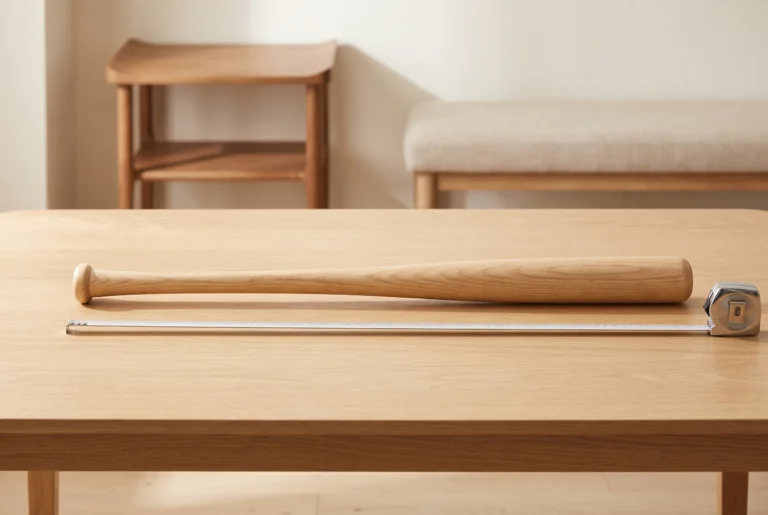
16 inches is approximately 40.6 centimeters, which is a little over 1.3 feet. It is 4 inches longer than a standard 12-inch ruler and 2 inches shorter than 18 inches, or 1.5 feet.
One of the easiest ways to understand this length is to place a 12-inch ruler alongside another 4-inch section. Together, they span exactly 16 inches.
The measurement is useful for describing an object’s length, width, height, diameter, or diagonal. However, these dimensions are not interchangeable. A circular object measuring 16 inches across and a rectangular object measuring 16 inches along one edge may occupy very different amounts of space.
16 Inches Conversion Table
| Unit | Equivalent of 16 Inches |
|---|---|
| Inches | 16 in |
| Feet and inches | 1 ft 4 in |
| Decimal feet | 1.3333 ft (approximately) |
| Centimeters | 40.64 cm |
| Millimeters | 406.4 mm |
| Meters | 0.4064 m |
| Yards | 0.4444 yd (approximately) |
These conversions follow the exact relationship of 1 inch equaling 2.54 centimeters. They apply regardless of whether you are measuring furniture, clothing, kitchen equipment, or construction materials.
How Does 16 Inches Compare With Other Lengths?
- Compared with 12 inches: 16 inches is 4 inches longer, an increase of one-third.
- Compared with 15 inches: It is just 1 inch longer.
- Compared with 18 inches: It is 2 inches shorter.
- Compared with 24 inches: It is exactly two-thirds as long.
- Compared with 1 meter: It is slightly more than 40% of a meter.
For a simple mental picture, visualize a standard school ruler with another third of its length added to one end. That combined distance is 16 inches.
18 Everyday Objects That Measure Around 16 Inches
Everyday objects can make unfamiliar measurements easier to recognize. The following 18 examples include products sold in 16-inch sizes and objects that can be reasonably close to that length.
Pay attention to whether each measurement refers to an object’s diameter, length, height, width, or diagonal. A labeled product size may also be nominal rather than an exact physical measurement.
1. A 16-Inch Pizza
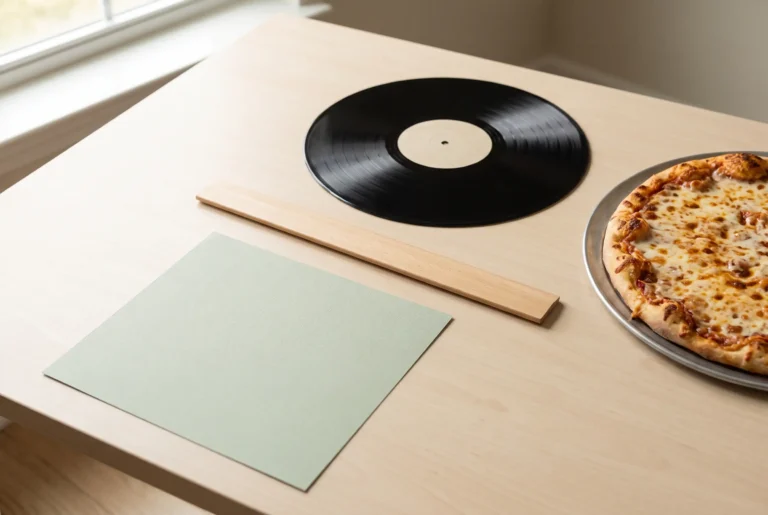
A pizza advertised as 16 inches usually refers to its diameter, measured straight across the center from one outer crust edge to the opposite edge.
A 16-inch pizza makes an excellent visual example because its circular shape clearly shows the distance. It has a radius of 8 inches, meaning the distance from the center to the crust is half the full diameter.
Not every restaurant uses the same size categories. A pizza called large might measure 14, 16, or another number of inches, depending on the restaurant. Look for a specifically advertised 16-inch pizza when you want a close reference.
Measurement: 16-inch advertised diameter.
2. A Large Kitchen Cutting Board
Kitchen cutting boards come in many dimensions, including versions measuring approximately 16 inches along their longer edge. A board around 16 by 12 inches provides space for slicing vegetables, chopping fruit, and preparing everyday meals.
Picture a rectangular cutting board resting on your kitchen counter. Its longer side can provide a straightforward visual representation of 16 inches.
Cutting boards can have rounded corners, handles, and juice grooves, so measure the outside edge rather than assuming the usable cutting surface equals the advertised length.
Measurement: 16-inch length on selected models.
3. A Large Round Serving Platter
Large serving platters are available with diameters close to 16 inches. These dishes are suitable for presenting appetizers, sandwiches, baked goods, or shared family meals.
Imagine a wide circular platter occupying a substantial portion of a dining table. Measuring from one edge through the center to the opposite edge gives its diameter.
A typical individual dinner plate is usually smaller, so a large serving platter is the more appropriate comparison.
Measurement: Approximately 16-inch diameter on selected platters.
4. A Rectangular Baking Pan
Some rectangular baking pans, roasting pans, and shallow baking trays measure around 16 inches along their longer side.
For example, a pan described as 16 by 12 inches provides a useful physical reference. Its long side represents the measurement, while its shorter side is only 12 inches.
Check whether the manufacturer’s dimensions include handles or outer rims. The usable interior surface can be smaller than the pan’s overall dimensions.
Measurement: 16-inch length on selected baking pans.
5. A 16-Inch Laptop Screen
Laptops sold with 16-inch displays offer another recognizable reference, although the measurement is often misunderstood.
The advertised display size measures the screen diagonally, not horizontally or vertically. A 16-inch screen has a diagonal close to 16 inches, while its width depends on the screen’s aspect ratio.
For example, a 16-inch display with a 16:10 aspect ratio has an approximate visible screen width of 13.57 inches and a height of 8.48 inches. The computer’s complete body will be larger because of the surrounding frame and housing.
Measurement: Approximately 16-inch display diagonal.
6. A 16-Inch Portable Monitor
Portable monitors are compact displays designed to provide additional screen space for laptops and other compatible devices. Some are sold with 16-inch screens.
Like laptop displays, their size is measured diagonally across the visible screen. Their actual widths can differ depending on aspect ratio and bezel design.
A portable monitor is a particularly useful example when comparing diagonal measurements with the straight-line length of a desk or table.
Measurement: Approximately 16-inch screen diagonal.
7. A Medium-to-Large Wall Clock
Decorative wall clocks are available in 16-inch circular designs. The measurement refers to the outside diameter of the clock, usually from one edge of the frame to the other.
A clock of this size creates a noticeable feature on a kitchen, hallway, or living room wall without being as large as oversized statement clocks.
If you already have a circular wall clock, measure across its widest point through the center. Some clocks have substantial frames, so the dial itself may be smaller than the clock’s advertised diameter.
Measurement: 16-inch outside diameter on selected clocks.
8. A 16-Inch Windshield Wiper Blade
Windshield wiper blades are sold in a variety of lengths, including 16 inches. This dimension identifies the blade’s nominal length from end to end.
A replacement blade labeled 16 inches provides a practical example of the measurement because it is long, relatively straight, and easy to picture.
However, different vehicles require different wiper sizes. The driver’s side, passenger’s side, and rear window may each use different lengths. Always verify your vehicle’s specifications before buying replacement blades.
Measurement: Nominal 16-inch blade length.
9. A 16-by-16-Inch Throw Pillow
Square decorative pillows are commonly sold in sizes such as 16 by 16 inches. This means the pillow is designed to measure approximately 16 inches across each side.
Place one on a couch and imagine measuring horizontally across its cover from one edge to the other. You have a convenient reference for the length.
A pillow’s stuffed shape can affect its apparent dimensions, so a flat pillow cover or insert specification is more useful for precise comparison.
Measurement: Nominal 16-inch width and height.
10. A Small Bathroom Wall Shelf
Bathroom shelves are manufactured in many lengths, including 16-inch versions suitable for small bottles, skincare products, folded washcloths, and other accessories.
A 16-inch shelf provides a useful reference for measuring narrow sections of wall space. Imagine a shelf extending slightly farther than a standard 12-inch ruler.
When installing one, consider its depth, brackets, mounting points, and clearance. A 16-inch shelf does not necessarily require mounting holes exactly 16 inches apart.
Measurement: 16-inch overall shelf length on selected models.
11. The Depth of a Desk Drawer
Some desk drawers have an interior or exterior depth close to 16 inches. Drawer depth is measured from front to back rather than across its opening.
This distance can accommodate smaller notebooks, writing tools, desk accessories, and various office supplies, depending on the drawer’s width and height.
It is important to distinguish the drawer’s outside depth from its usable inside depth. Drawer construction and sliding mechanisms reduce the interior dimensions.
Measurement: Approximately 16-inch depth on certain desk drawers.
12. A 16-Inch Magnetic Tool Holder
Magnetic tool holders are designed to organize metal tools along a wall or workbench. Some models are sold with an overall length of 16 inches.
These rectangular bars provide a straightforward visual example because their long edge is typically the main listed dimension.
When installing a tool holder, check the mounting-hole spacing rather than assuming it matches the product’s overall length. Wall studs in many US homes are spaced 16 inches on center, but this does not mean every 16-inch holder aligns with two studs.
Measurement: 16-inch overall length on selected tool holders.
13. A Children’s Bicycle With 16-Inch Wheels
Bicycles designed for younger children are available in a 16-inch wheel size. This is a familiar product category for families shopping for children’s bikes.
However, bicycle wheel sizing requires caution. A 16-inch wheel designation is a nominal size associated with particular wheel and tire systems, not a promise that every fully inflated wheel measures exactly 16 inches across.
The actual outside diameter depends on the tire and rim combination. Different tire standards can also share similar nominal inch labels.
Measurement: Nominal 16-inch bicycle wheel size.
14. A Skateboard With a Long Wheelbase
A skateboard’s wheelbase is the distance between the centers of its front and rear truck axles. Certain skateboards, especially some longer decks designed for cruising or transition riding, have wheelbases approaching 16 inches.
The wheelbase is different from the skateboard’s complete deck length. For example, a board can be over 30 inches long while its axles are separated by approximately 16 inches.
Skateboard manufacturers may also specify wheelbase using the spacing between the truck mounting holes rather than the exact axle-to-axle distance. Check which convention is being used before comparing products.
Measurement: Approximately 16-inch wheelbase on selected boards.
15. A Candlepin Bowling Pin
Candlepin bowling uses tall, narrow pins that look different from the shorter, wider pins used in standard tenpin bowling.
A regulation candlepin is 15.75 inches tall, which is just one-quarter inch shorter than 16 inches. This makes it an unusually close reference for the measurement.
If you have seen candlepin bowling, picture one of its slender pins standing upright. Its height is almost exactly the length being discussed.
Measurement: 15.75-inch height, 0.25 inch short of 16 inches.
16. The Short Side of A2 Paper
A2 paper is an international paper size used for posters, artwork, diagrams, and larger-format printing.
According to the ISO A-series dimensions, an A2 sheet measures 420 by 594 millimeters. Its shorter side is approximately 16.54 inches, making it about half an inch longer than 16 inches.
This example is especially useful for designers, educators, and anyone working with printing materials. However, A2 paper is not the same size as American letter or legal paper, both of which are considerably narrower.
Measurement: 16.54-inch short side, approximately 0.54 inch longer than 16 inches.
17. Two New Wooden Pencils Placed End to End
A typical new, unsharpened wooden pencil is roughly 7.5 inches long, although lengths vary among brands and pencil designs.
Place two pencils end to end and their combined length will be approximately 15 inches. That is just 1 inch short of 16 inches.
You can add a small 1-inch reference, such as a marked segment on a ruler, to visualize the remaining difference. This is a convenient classroom or office comparison when exact accuracy is not essential.
Measurement: Approximately 15 inches for two standard pencils.
18. Sixteen One-Inch Paper Clips Arranged in a Row
Small paper clips can help illustrate length when their individual dimensions are known. Some standard-sized clips are approximately 1 inch long.
If you arrange sixteen clips that each measure exactly 1 inch from end to end, without gaps or overlaps, the total length will be 16 inches.
This is a conditional example rather than a reliable measuring standard. Paper clips come in different sizes, and even small differences accumulate when several are placed together.
For a better estimate, measure one clip first and multiply its length by the number used. A row of sixteen clips that are each 1.25 inches long, for example, would measure 20 inches rather than 16 inches.
Measurement: Approximately 16 inches only when each clip is 1 inch long and arranged without gaps.
Quick Comparison of All 18 Examples
The following table separates objects with a specified 16-inch size from those that provide only an approximate comparison.
| Everyday Object | Relevant Dimension | How Close to 16 Inches? |
|---|---|---|
| 16-inch pizza | Diameter | Specified 16-inch size |
| Large cutting board | Length | 16-inch models available |
| Large serving platter | Diameter | 16-inch models available |
| Rectangular baking pan | Length | 16-inch models available |
| 16-inch laptop screen | Diagonal | Approximately 16 inches |
| Portable monitor | Diagonal | 16-inch models available |
| Wall clock | Diameter | 16-inch models available |
| Windshield wiper blade | Length | Nominal 16-inch size |
| Square throw pillow | Width or height | Nominal 16-inch size |
| Bathroom wall shelf | Length | 16-inch models available |
| Desk drawer | Depth | Approximately 16 inches on some desks |
| Magnetic tool holder | Length | 16-inch models available |
| Children’s bicycle wheel | Nominal wheel size | Not necessarily 16 inches physically |
| Skateboard | Wheelbase | Close to 16 inches on some models |
| Candlepin bowling pin | Height | 15.75 inches |
| A2 paper | Shorter side | 16.54 inches |
| Two wooden pencils | Combined length | Approximately 15 inches |
| Sixteen 1-inch paper clips | Combined length | 16 inches if each clip is exactly 1 inch |
If you need a reliable 16-inch visual reference, choose an object explicitly manufactured or marked with that dimension. For approximate comparisons, remember that models, materials, and measuring conventions can affect the actual size.
How to Measure 16 Inches Without a Tape Measure
When a measuring tape is unavailable, several familiar objects can help you estimate 16 inches. The best method depends on the accuracy you need and which items you have nearby.
Method 1: Use a 12-Inch Ruler Twice
A standard ruler is one of the simplest ways to measure 16 inches accurately, even though it is only 12 inches long.
- Place the ruler flat against the object or surface.
- Align its zero mark with your starting point.
- Mark the position corresponding to 12 inches.
- Move the ruler so its zero mark aligns with your new mark.
- Measure another 4 inches to reach a total of 16 inches.
Make sure the ruler stays straight during both measurements. A slight change in angle can introduce an error.
Method 2: Measure With a Letter-Size Sheet of Paper
US letter paper measures 8.5 inches wide and 11 inches long.
Two sheets placed side by side along their 8.5-inch edges span 17 inches in total, assuming no gap or overlap. This is 1 inch longer than the target measurement.
If you have a way to mark off that extra inch, the remaining distance represents 16 inches. This approach works for rough measurements but is less convenient than using a ruler.
Method 3: Use a Standard Credit Card as a Reference
A standard ID-1 payment card measures approximately 3.37 inches along its longer edge. Five cards placed end to end would span approximately 16.85 inches.
That is about 0.85 inch longer than 16 inches. The method can help estimate the length when you know the difference, but gaps between cards make it unsuitable for precise work.
A single card can also be repositioned repeatedly, provided you mark each endpoint carefully.
Method 4: Use Two 8-Inch Sections
If you can identify or measure an accurate 8-inch segment, repeating it twice creates a 16-inch distance.
You could mark an 8-inch interval on a straight strip of cardboard, then use the strip twice along the same line. This is especially helpful for transferring a known measurement onto another surface.
For home improvement, woodworking, or any project where fractions of an inch matter, use a proper measuring instrument instead of relying on approximate household objects.
What Does 16 Inches Look Like in Different Directions?
A 16-inch measurement can appear larger or smaller depending on the object’s shape and the direction in which it is measured.
16 Inches Horizontally
Imagine a 16-inch shelf fixed to a wall or a cutting board positioned across a countertop. The measurement runs from left to right.
This orientation is especially useful when measuring furniture widths, available wall space, and gaps between objects.
16 Inches Vertically
Imagine a rectangular object standing 16 inches tall. Its height is 1 foot and 4 inches from its bottom edge to its top edge.
This is a helpful reference when checking whether an appliance, box, decorative item, or storage container will fit beneath a shelf.
16 Inches Across a Circle
A circle with a 16-inch diameter measures 16 inches across its center. A 16-inch pizza or wall clock illustrates this dimension.
The radius is 8 inches, while the circumference is approximately 50.27 inches. The circumference is much longer because it represents the entire distance around the circular edge.
16 Inches Diagonally
A 16-inch diagonal is a measurement from one corner to the opposite corner of a rectangle, such as a screen.
For a 16:10 screen, a 16-inch diagonal corresponds to approximately 13.57 inches of width and 8.48 inches of height. That makes a 16-inch diagonal noticeably different from a 16-inch horizontal width.
When shopping for monitors, laptops, and televisions, check both the diagonal screen size and the overall product dimensions.
Why 16 Inches Matters in Everyday Projects
Knowing how to recognize 16 inches is useful beyond simple measurement comparisons. The dimension appears in household products, construction layouts, and sizing decisions.
Furniture and Storage Planning
A 16-inch shelf, drawer, or storage organizer can occupy enough space to affect a room’s layout. If you are buying furniture, measuring the available area helps prevent clearance problems.
Suppose you have a space that measures exactly 16 inches wide. A cabinet advertised as 16 inches wide may fit tightly or may require additional room for hinges, trim, handles, or installation clearance.
Compare the product’s full external dimensions with the available space rather than relying on a single nominal measurement.
Construction and Wall Stud Spacing
In many wood-framed US residential walls, studs are installed at 16 inches on center. This describes the distance between the centerlines of adjacent studs, not the empty space between them.
For example, if adjacent studs are 16 inches on center and each is 1.5 inches thick, the clear distance between their facing edges is approximately 14.5 inches.
Other construction layouts use different spacing, and actual framing can vary near windows, doors, corners, and structural features. Use a suitable stud finder and confirm the framing before installing heavy wall-mounted objects.
Choosing Products by Size
Manufacturers may label products using external dimensions, interior dimensions, nominal sizes, or diagonal measurements.
A 16-inch baking pan might have a smaller usable cooking area. A 16-inch wheel designation may not correspond to the exact outside tire diameter. A 16-inch screen may be considerably narrower than 16 inches.
Understanding how each product category is measured helps avoid ordering the wrong size.
Common Mistakes When Estimating 16 Inches
Several measurement mistakes can make an otherwise simple comparison inaccurate.
- Confusing inches with centimeters: 16 centimeters equals approximately 6.30 inches, much shorter than 16 inches.
- Using a product’s advertised size as a precise physical dimension: Nominal measurements can differ from actual dimensions.
- Comparing different directions: A 16-inch diagonal cannot be treated as a 16-inch width.
- Ignoring gaps between objects: Small spaces between pencils, cards, or paper clips add to the combined length.
- Measuring along a curve: The distance around a curved object is different from a straight-line measurement across it.
- Forgetting clearance: An object measuring exactly 16 inches may need additional space for comfortable installation or movement.
For everyday estimates, a difference of half an inch may be acceptable. For cutting materials, fitting replacement parts, or installing fixtures, the same error can be significant.
16 Inches Compared With 10, 12, 18, and 20 Inches
Comparing 16 inches with nearby measurements can help you judge sizes more confidently.
| Length | Centimeters | Difference From 16 Inches |
|---|---|---|
| 10 inches | 25.40 cm | 6 inches shorter |
| 12 inches | 30.48 cm | 4 inches shorter |
| 14 inches | 35.56 cm | 2 inches shorter |
| 16 inches | 40.64 cm | Exact reference |
| 18 inches | 45.72 cm | 2 inches longer |
| 20 inches | 50.80 cm | 4 inches longer |
| 24 inches | 60.96 cm | 8 inches longer |
Notice that 16 inches falls exactly halfway between 12 and 20 inches. It also represents two-thirds of a 24-inch distance.
These relationships are useful for estimating dimensions when you can recognize a shorter or longer length but do not have access to a measuring tool.
How to Make Your 16-Inch Estimate More Accurate
Visual comparisons are most useful when you approach them systematically rather than relying entirely on guesswork.
- Identify the required dimension. Determine whether you need length, width, height, depth, radius, diameter, or diagonal.
- Choose a suitable reference. Prefer an object with a known, specified measurement instead of one that merely looks similar.
- Check the reference object’s actual size. A product labeled 16 inches may have a nominal measurement or include additional parts.
- Keep the comparison straight. Align the reference and the object along the same direction, without angling or bending the reference.
- Allow for uncertainty. Treat an estimate as approximate unless you have verified the distance with an appropriate measuring tool.
- Confirm critical dimensions. Before drilling holes, cutting materials, or ordering precisely fitted parts, take a direct measurement.
A reliable measurement can prevent wasted materials, unsuitable purchases, and unnecessary adjustments. When accuracy matters, a steel ruler, tape measure, or other calibrated tool remains the best choice.
Understanding 16 Inches Through Familiar Everyday Objects
16 inches equals exactly 1 foot and 4 inches, or 40.64 centimeters. Familiar examples include a 16-inch pizza, a square throw pillow with 16-inch sides, selected cutting boards and wall shelves, and laptop screens with 16-inch diagonals. Each provides a different way to visualize this length.
The most important detail is understanding what part of an object is being measured. Some examples represent an exact specified dimension, while others are only approximate or nominal. Use these comparisons for everyday visualization, but confirm the actual measurement with a ruler or tape measure whenever precision is necessary.
Frequently Asked Questions
How long is 16 inches compared to a ruler?
16 inches is 4 inches longer than a standard 12-inch ruler. You can measure it by marking 12 inches first and then adding another 4 inches along the same straight line.
How many centimeters are in 16 inches?
16 inches equals exactly 40.64 centimeters. The conversion uses the internationally defined relationship of 2.54 centimeters per inch.
What household item is exactly 16 inches long?
Some cutting boards, shelves, and magnetic tool holders are manufactured with a specified 16-inch overall length. A 16-by-16-inch pillow cover is another useful reference, although the actual dimensions of a stuffed pillow can vary.
Is 16 inches longer than one foot?
Yes, 16 inches is exactly 4 inches longer than one foot. Since one foot contains 12 inches, 16 inches equals 1 foot and 4 inches.
How can I measure 16 inches without a ruler?
You can estimate 16 inches using two new pencils, a 16-inch pillow cover, or another object with a known dimension. For a closer measurement, mark out two verified 8-inch segments along a straight line.
Is a 16-inch laptop actually 16 inches wide?
No, the advertised 16-inch measurement describes the screen’s diagonal, not its width. For example, a 16-inch screen with a 16:10 aspect ratio has a visible width of approximately 13.57 inches.
How long is 16 inches of hair?
16 inches of hair represents a strand length of 40.64 centimeters when measured along the hair. Where it falls on a person’s body depends on their height, proportions, hairstyle, and whether the hair is straight, wavy, or curly.
Is 16 inches the same as 40 centimeters?
Not exactly, because 16 inches equals 40.64 centimeters. The difference is 0.64 centimeter, or approximately one-quarter inch, which may matter when precise sizing is required.